

Criminology is one of the most complex and important human and social sciences in the modern era. It strives to answer a fundamental question: Why do individuals commit crimes? The study of criminology is not limited to merely describing criminal acts; it extends to analyzing the criminal phenomenon from multiple angles, aiming to understand the motives of the offender, their characteristics, and the surrounding circumstances. Criminology is divided into three main branches that form the foundational pillars for understanding deviant behavior: Criminal Biology, Criminal Psychology, and Criminal Sociology .
In this detailed article, we will delve into the depths of these three branches, reviewing the foundational theories of each and how they have contributed to shaping our contemporary understanding of crime and criminals, with a focus on their scientific and practical dimensions.
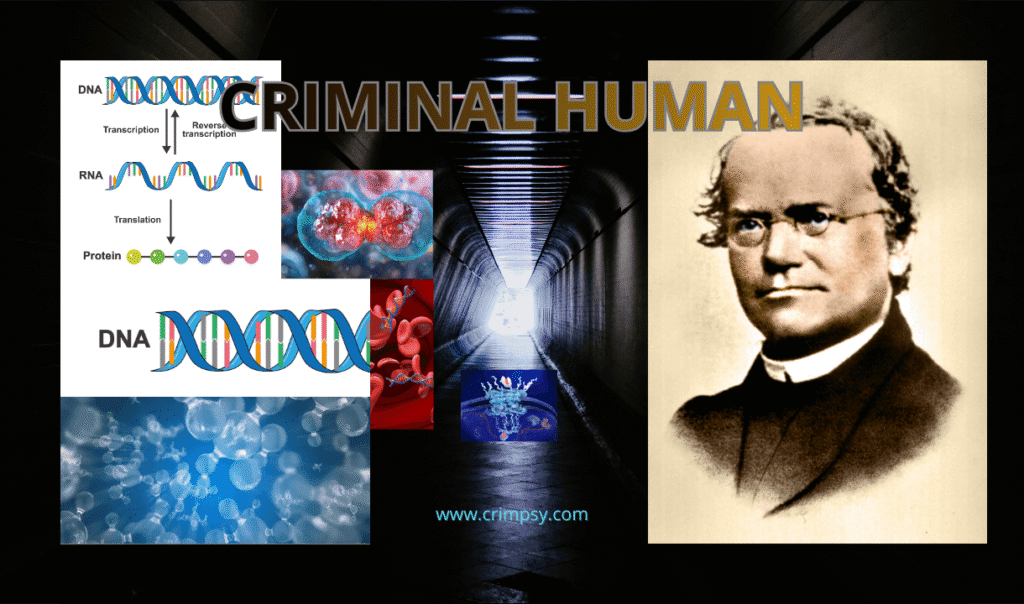
First Axis: Criminal Biology or Biological Criminology (The Study of the Criminal Nature)
Biological criminology emerged during the nineteenth century as scholars sought to provide a scientific explanation for crime beyond moral or theological interpretations. Researchers began to question whether certain biological or physical traits might predispose individuals toward criminal behavior. This inquiry led to the development of what later became known as the positivist school of criminology.
One of the most influential figures associated with this perspective was the Italian physician Cesare Lombroso, who is widely regarded as the founder of modern criminology. Lombroso attempted to demonstrate, through anatomical studies of prisoners and criminals, that certain individuals are biologically predisposed to criminal behavior. According to his theory, the criminal is not merely a person who freely chooses to violate the law; rather, the criminal may be the product of inherited biological characteristics that distinguish him from ordinary individuals.
Lombroso believed that criminals possessed specific physical features that could reveal their innate tendency toward crime. These characteristics included asymmetrical facial structures, pronounced jaws, unusually large ears, and long arms relative to body size. He argued that such features represented what he called atavism, meaning that criminals were evolutionary throwbacks who retained primitive traits from earlier stages of human development.
Although Lombroso’s theories were later criticized and partially discredited, his work played a crucial role in transforming the study of crime into a scientific field of inquiry. Before Lombroso, crime was largely explained through philosophical speculation or moral judgment. Lombroso introduced empirical observation and systematic study, encouraging researchers to examine criminals as subjects of scientific investigation rather than merely as objects of moral condemnation.
Other scholars expanded and modified Lombroso’s ideas. Among them were Enrico Ferri and Raffaele Garofalo, who contributed significantly to the development of the positivist school. Ferri argued that crime could not be explained solely by biological factors; instead, it should be understood as the result of a complex interaction between individual traits and environmental influences. Garofalo, on the other hand, emphasized the concept of natural crime, suggesting that certain individuals lack the moral sentiments necessary for social life, such as compassion and honesty.
Over time, biological criminology evolved in response to advances in genetics, neuroscience, and behavioral science. Contemporary researchers study the relationship between brain structure, hormonal influences, and aggressive behavior. Modern studies have examined the role of neurological abnormalities, genetic predispositions, and biochemical imbalances in shaping human behavior. However, unlike early biological theories, contemporary criminology generally rejects the deterministic view that individuals are “born criminals ”. nstead, most modern scholars emphasize that biological factors interact with psychological and environmental influences. A person may possess certain biological traits that increase the likelihood of aggressive behavior, but whether these tendencies develop into criminal acts often depends on social context, upbringing, and personal experiences.
Consequently, biological criminology remains an important yet controversial field within criminology. While it highlights the potential influence of biological conditions on behavior, it also raises ethical concerns about labeling individuals as inherently predisposed to crime. Modern criminology therefore tends to adopt a balanced perspective, recognizing that crime is best understood through the interaction of biological, psychological, and social factors.

Second Axis: Criminal Psychology
While biological criminology focuses on the physical characteristics of offenders, criminal psychology directs attention toward the inner world of the individual—the realm of thoughts, emotions, motivations, and personality structures that influence behavior. From this perspective, crime is not simply the product of biological predispositions; it is also shaped by psychological processes and experiences that form the individual’s personality.
One of the most influential thinkers in the psychological interpretation of crime was the Austrian psychoanalyst Sigmund Freud. Freud’s theory of psychoanalysis proposed that human behavior is largely influenced by unconscious conflicts within the mind. According to Freud, the human personality consists of three fundamental components: the id, the ego, and the superego.
The id represents the instinctual drives and primitive desires that seek immediate gratification, while the superego embodies moral standards and social values internalized from society. The ego acts as a mediator between these two forces, attempting to balance instinctual desires with moral and social constraints.
Freud suggested that criminal behavior may arise when the superego—the moral conscience—fails to adequately control the impulses of the id. In such cases, aggressive or selfish impulses may dominate the individual’s behavior, leading to actions that violate social and legal norms. Furthermore, Freud believed that many psychological conflicts originate in childhood experiences. Trauma, neglect, or unresolved emotional tensions during early development may later manifest in antisocial or criminal behavior.
Subsequent psychologists expanded upon Freud’s ideas while introducing new perspectives on criminal behavior. Some researchers focused on personality disorders, particularly psychopathy and antisocial personality disorder, conditions characterized by a lack of empathy, impulsivity, and disregard for the rights of others. Individuals with these personality traits often exhibit patterns of manipulation, deceit, and aggression.
Another influential figure in psychological criminology was Hans Eysenck, who attempted to link criminal behavior with specific personality traits. Eysenck argued that individuals who score high on traits such as impulsivity, extraversion, and neuroticism may be more likely to engage in deviant behavior. According to his theory, such individuals may have difficulty learning social rules and controlling their impulses, increasing their susceptibility to criminal activity.
Criminal psychology has also contributed significantly to practical applications in the criminal justice system. One of the most notable examples is criminal profiling, a technique used to analyze behavioral patterns and psychological characteristics of offenders in order to assist law enforcement investigations. By examining the manner in which a crime is committed, psychologists attempt to infer details about the offender’s personality, habits, and lifestyle.
Additionally, psychological approaches play an important role in rehabilitation programs within correctional institutions. By addressing underlying psychological issues—such as trauma, addiction, or emotional instability—these programs aim to reduce the likelihood of reoffending and facilitate the reintegration of offenders into society.
In this sense, criminal psychology provides valuable insights into the mental and emotional dynamics that may drive individuals toward criminal behavior, highlighting the importance of understanding the human psyche in the broader study of crime.

Third Axis: Criminal Sociology
Unlike biological and psychological approaches that focus primarily on the individual, criminal sociology shifts the focus toward society itself. It seeks to understand how social structures, cultural norms, and economic inequalities influence the emergence of crime within communities.
One of the most prominent figures in this field was the French sociologist Émile Durkheim, who argued that crime is not necessarily a pathological phenomenon but rather a normal and inevitable feature of all societies. According to Durkheim, every society establishes norms and values that define acceptable behavior. However, because individuals differ in their beliefs and circumstances, some degree of deviance will always exist.
Durkheim further suggested that crime may even serve a positive function within society. By punishing offenders, society reaffirms its moral boundaries and strengthens collective values. In this way, crime indirectly contributes to social cohesion by clarifying the limits of acceptable behavior.
Another influential thinker in sociological criminology was the American criminologist Edwin Sutherland, who developed the theory of differential association. Sutherland argued that criminal behavior is learned through interaction with others. Individuals acquire the techniques, motivations, and rationalizations for committing crimes through communication within their social groups.
According to this theory, a person who grows up in an environment where criminal behavior is common may gradually adopt attitudes that justify or encourage such behavior. Crime, therefore, becomes a learned social practice rather than a purely individual defect.
Sociological explanations of crime were also influenced by the ideas of Karl Marx, whose analysis of capitalist society emphasized the role of economic inequality and class conflict. Marx argued that social systems characterized by extreme disparities in wealth and power create conditions that foster crime. Poverty, unemployment, and social marginalization may push individuals toward illegal activities as a means of survival or resistance.
Later sociological theories expanded these ideas further. For example, Robert K. Merton’s strain theory suggested that crime may occur when there is a disconnect between culturally valued goals—such as economic success—and the legitimate means available to achieve them. When individuals are unable to achieve these goals through lawful channels, they may resort to deviant or criminal alternatives.
Thus, criminal sociology emphasizes that crime cannot be fully understood without examining the broader social context in which it occurs. Social inequality, cultural norms, urbanization, and economic structures all play a role in shaping patterns of criminal behavior.
Conclusion
The study of the branches of criminology reveals that crime is a complex phenomenon that cannot be explained through a single perspective. Biological criminology highlights the potential influence of genetic and physiological factors, criminal psychology explores the internal motivations and personality dynamics of offenders, while criminal sociology examines the broader social and economic conditions that contribute to criminal activity.
Taken together, these perspectives demonstrate that human behavior is shaped by the interaction of biological, psychological, and social influences. Understanding crime therefore requires a comprehensive approach that integrates insights from multiple disciplines. Only by considering the full complexity of human nature and social life can researchers and policymakers develop effective strategies for preventing crime and promoting social justice.
References
DeLisi, M. (2012). Revisiting Lombroso. In F. T. Cullen & P. Wilcox (Eds.), The Oxford Handbook of Criminological Theory. Oxford University Press.
https://academic.oup.com/edited-volume/41356/chapter/352524326
Fornari, U. (2012). Cesare Lombroso: Methodological ambiguities and brilliant intuitions. International Journal of Law and Psychiatry, 35(1).
https://www.sciencedirect.com/science/article/abs/pii/S0160252711001208
Raine, A. (2022). Biosocial Criminology: History, Theory, Research Evidence, and Policy. Journal of Crime and Justice.
https://www.tandfonline.com/doi/full/10.1080/15564886.2022.2133035
Machado, H., & Granja, R. (2020). Biological Explanations of Criminal Behaviour. In Forensic Genetics in the Governance of Crime. Springer.
https://link.springer.com/chapter/10.1007/978-981-15-2429-5_3
Sirgiovanni, E. (2017). Criminal heredity: The influence of Cesare Lombroso’s concept of the “born criminal.”
https://www.researchgate.net/publication/301215111_Criminal_heredity_the_influence_of_Cesare_Lombroso
Gibson, M. (2013). Cesare Lombroso and Italian Criminology: Theory and Politics. Cambridge University Press.
https://www.cambridge.org/core/services/aop-cambridge-core/content/view/03CD6CBCC0F8F3AE39C07D4C67F20491/9781139052405c06_p137-158_CBO.pdf
Durkheim, É. (1895). The Rules of Sociological Method.
https://www.gutenberg.org/ebooks/33383
Sutherland, E. H. (1947). Principles of Criminology.
https://archive.org/details/principlesofcrim00suth
Marx, K. (1867). Capital: A Critique of Political Economy.
https://www.marxists.org/archive/marx/works/1867-c1
- What is Criminology? A Comprehensive Look at Crime and Its Explanations
https://www.crimpsy.com/what-is-criminology/ - Definition of Criminology: The Broad and Narrow Concepts of Criminology
https://www.crimpsy.com/definition-of-criminology/ - The Broad Concept of Criminology
https://www.crimpsy.com/the-broad-concept-of-criminology/ - Criminology and Other Sciences: An Integrated Relationship for Understanding Crime
https://www.crimpsy.com/criminology-and-other-sciences-an-integrated-relationship-for-understanding-crime/ - Forensic Science and Criminology: Exploring the Interplay
https://www.crimpsy.com/forensic-science-and-criminology/ - The Essence of Criminology: Definitions, Scientific Foundations, and Key Objectives
https://www.crimpsy.com/the-essence-of-criminology-definitions-objectives/ - Victimology and Criminology
https://www.crimpsy.com/victimology-and-criminology/