The Essence of Criminology: Definitions, Scientific Foundations, and Key Objectives
A conceptual illustration representing the essence of criminology, showing symbolic elements related to crime, justice, and social analysis.

Crime has always represented one of the most complex and troubling phenomena facing human societies. From ancient civilizations to modern nation-states, communities have continuously sought to understand why individuals engage in behavior that violates social norms, disrupts public order, and threatens collective security. As societies evolved and crime took on increasingly diverse forms—ranging from traditional … Read more

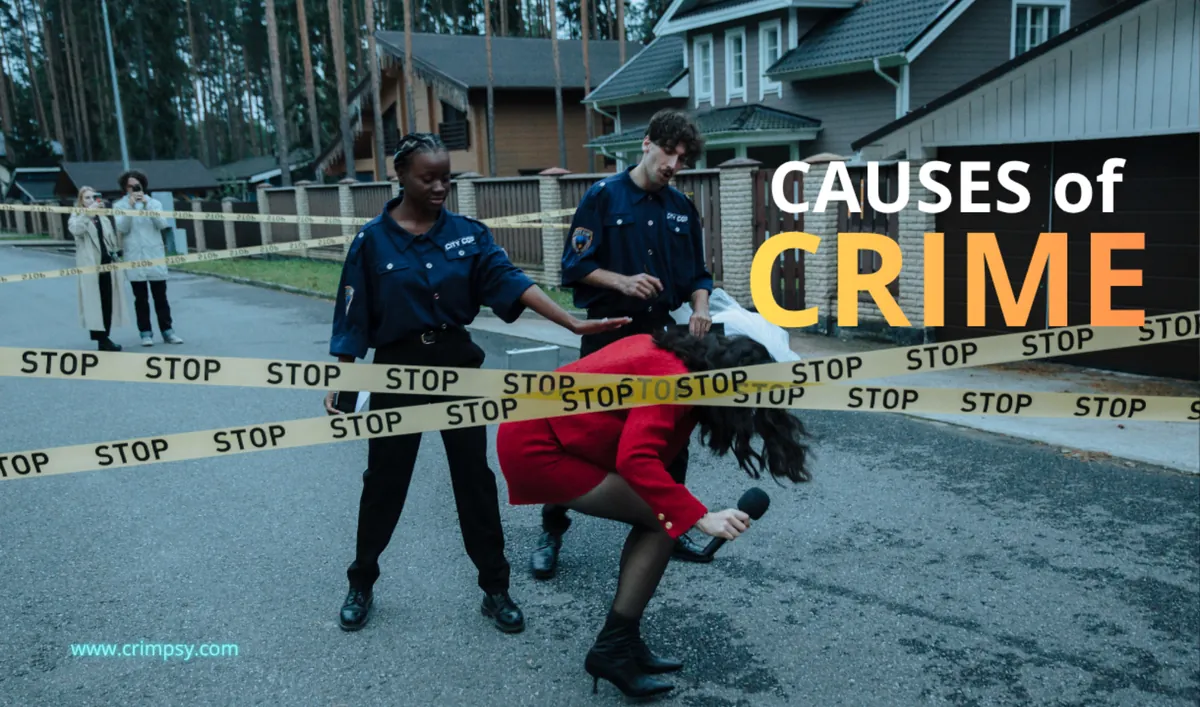
Albert K. Cohen, Karl Marx, and Robert K. Merton: Causes of crime

police officers and forensic team at crime scene causes of crime criminology theory

Introduction: criminology theories Criminology has never been a discipline built upon a single explanatory key. It is, rather, a field of tension, dialogue, and contestation, where each major theory illuminates one dimension of the criminal phenomenon while leaving others in partial shadow. Crime is at once a legal violation, a social act, a moral rupture, … Read more

Criminal Psychology: How Criminal Minds Think

Conceptual image representing criminal psychology and how criminal minds think with dark tones and human brain illustration

Introduction: Criminal Mind Crime cannot be understood as merely an unlawful act; rather, it is a complex human phenomenon that emerges from the depths of the human psyche, where desires, conflicts, social pressures, and biological structures intertwine. Criminal psychology does not only ask “what happened?” but goes beyond it to a deeper question: “why did … Read more

Criminal Psychology: Understanding Human Behavior

Criminal psychology concept showing human brain, neural connections, and crime investigation elements

Criminal psychology is a precise branch of psychology, not limited to merely studying crime as an act contrary to the law, but it seeks to penetrate the depths of the human psyche to understand the internal structure that produces this act. From the perspective of this science, crime is not a random incident or a … Read more

Branches of Criminology

Diagram illustrating the main branches of criminology including criminal sociology, criminal psychology, and criminal biology

Criminology is one of the most complex and important human and social sciences in the modern era. It strives to answer a fundamental question: Why do individuals commit crimes? The study of criminology is not limited to merely describing criminal acts; it extends to analyzing the criminal phenomenon from multiple angles, aiming to understand the … Read more

The Psychology of Organized Crime in the Digital Age | Criminology

A hooded figure representing a digital cybercriminal sits surrounded by computer screens, glowing code, and a global network map, illustrating the psychology of organized crime in the digital age.

Introduction: Why Has the Psychology of Organized Crime in the Digital Age Become a Central Topic in Criminology? Organized crime in the twenty-first century is no longer confined to traditional gangs that rely on territorial control and direct violence. We have entered a new historical phase in which cyberspace has transformed into a parallel criminal … Read more

Jeffrey Epstein and Criminology: Applying Lombroso, Sutherland, and Marx’s Theories

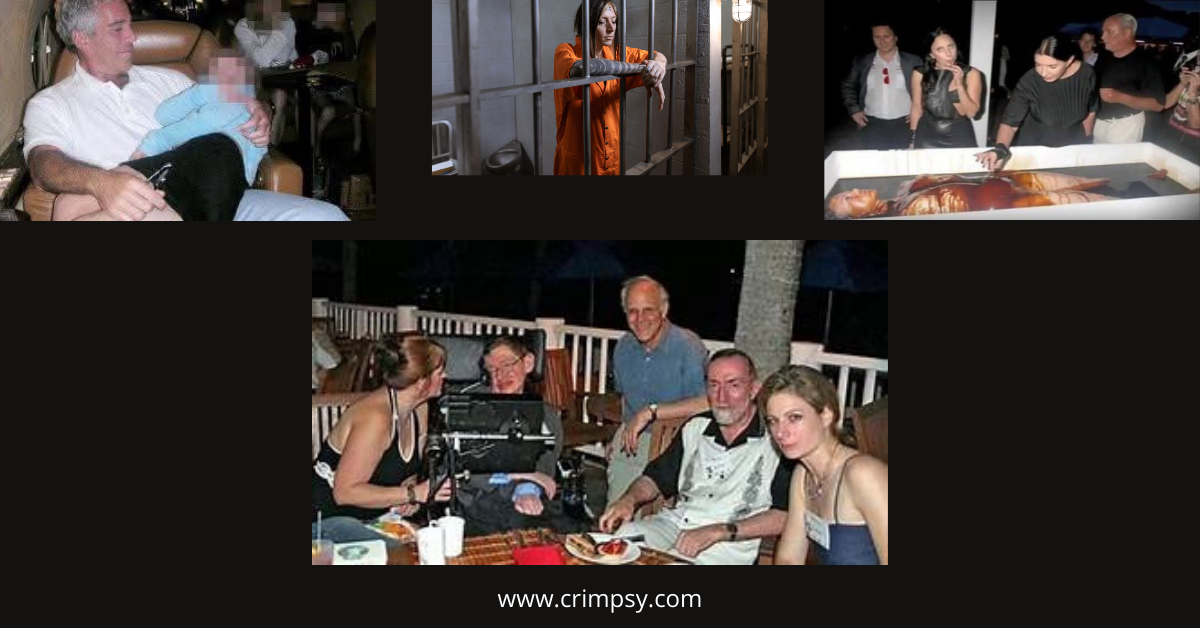
A collection of photos showing Jeffrey Epstein and a number of other prominent figures, released by the U.S. Department of Justice.

Jeffrey Epstein (1953–2019) was an American businessman who gained international notoriety due to his involvement in a large-scale sexual exploitation case targeting children and underage girls, as well as his connections to prominent political, economic, and academic figures. These associations placed him at the center of one of the most controversial criminal scandals of the … Read more

The Ideas of Edwin Sutherland in Criminology

A true image of the thinker Edwin Sutherland

Edwin Sutherland is considered one of the most prominent criminologists of the twentieth century and one of the true founders of the social school in criminology. His ideas represented a fundamental turning point in explaining criminal behavior, as he shifted attention from biological and individual psychological factors to social and interactional factors. Below is a … Read more

The Scientific Nature of Criminology: The Opposing Trend and Its Main Criticisms

A dark and mysterious forensic setting featuring the phrase 'Criminology is not a science !' in glowing orange text at the center. The scene includes an open book with a magnifying glass, fingerprints, laboratory glassware, a microscope, a glowing DNA strand, and scattered investigative tools, creating a scholarly and dramatic atmosphere.

Is Criminology a Science The question of whether criminology can be regarded as a true science has long occupied a central place in criminological and philosophical debates. Since its emergence as an independent field of study, criminology has sought to explain criminal behavior through systematic observation, empirical research, and theoretical frameworks inspired by the natural … Read more

Expanded Concepts of Criminology: Ferri, the Austrian School, and Sutherland

A horizontal, enigmatic artwork symbolizing the Austrian School of Criminology, with an abstract, moody background, emphasizing forensic science, investigation, and criminal behavior, without any prominent human figures.

Criminology is one of the human sciences whose intellectual roots can be traced back to early philosophical reflections on crime, morality, and social order. Ancient Greek philosophers, particularly Plato and Aristotle, sought to understand criminal behavior through ethical reasoning and the pursuit of justice, viewing crime as a moral deviation that threatened the harmony of … Read more

George Vold’s Conflict Theory: Principles, Applications, and Criticisms

Artistic depiction of conflict theory in criminology based on George Vold | George Vold’s Conflict Theory

In the scholarship of criminology, the nature of crime has been scrutinized from many angles—psychological, biological, sociological, and structural. Among these perspectives, conflict theory stands out for highlighting power struggles and social inequality as fundamental sources of criminal behavior. Conflict theory posits that crime cannot simply be reduced to individual failing; it also emerges from … Read more

Psychopathy in Criminology: Theoretical Foundations, Diagnostic Methods, and Criminal Implications

Image produced by CRIMPSY.COM about psychopathy

Introduction to Psychopathy Psychopathy is one of the most complex, controversial, and deeply studied constructs in criminology. It represents a profound disturbance in personality functioning, characterized by emotional detachment, lack of empathy, superficial charm, manipulation, pathological lying, impulsivity, and a striking absence of remorse. Although the term itself has roots in early psychiatric traditions, its … Read more