Theories of criminal behavior | CRIMINOLOGY
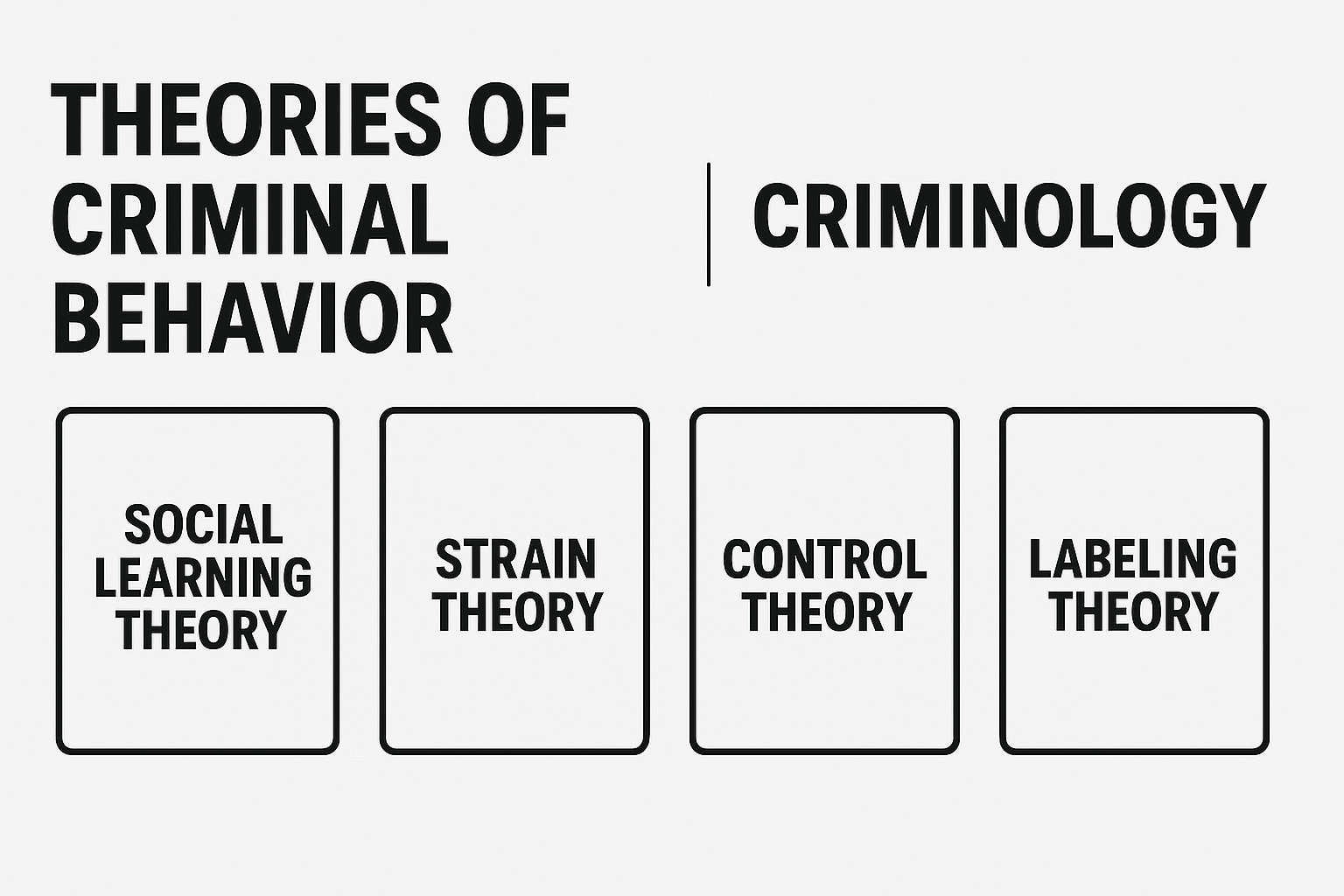
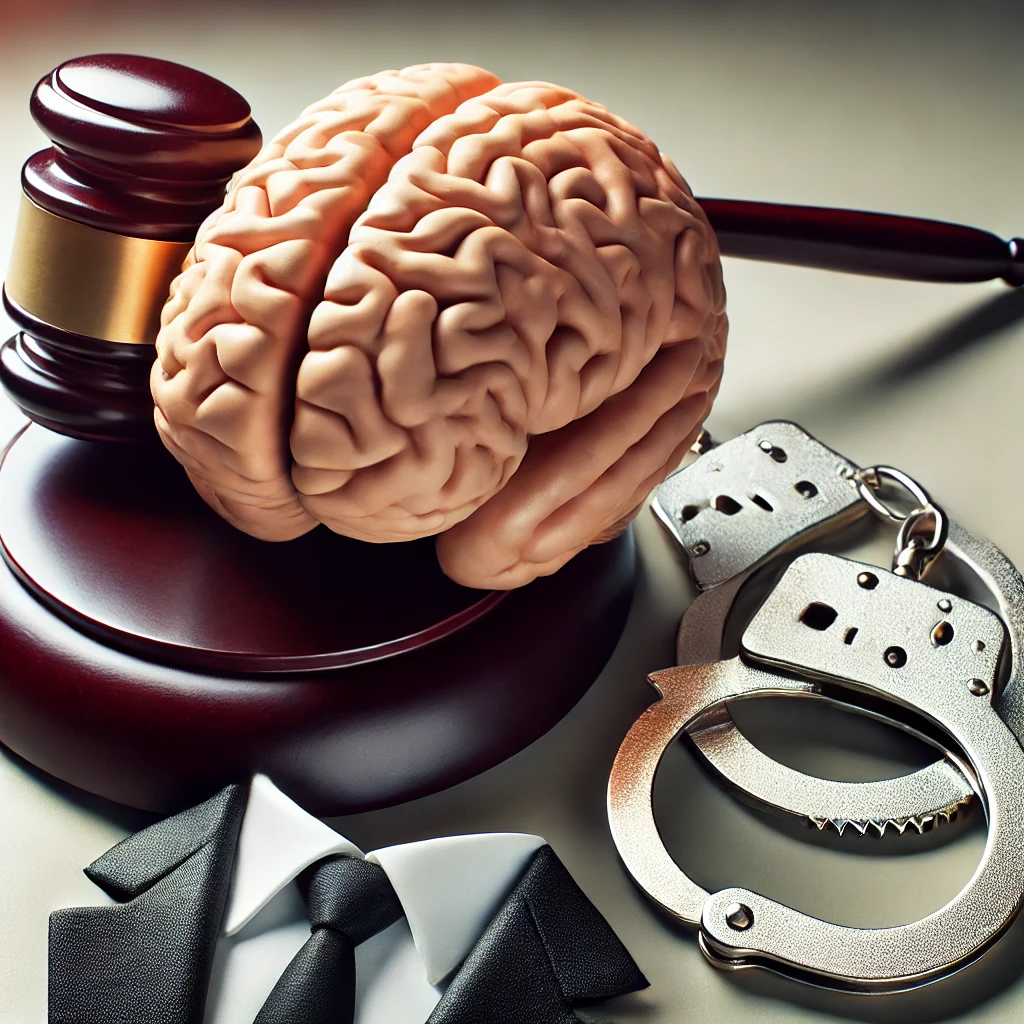
A horizontal infographic titled 'Theories of Criminal Behavior | Criminology'. The image is divided into four labeled boxes representing major criminological theories: 'Social Learning Theory', 'Strain Theory', 'Control Theory', and 'Labeling Theory'. The design is minimalistic, using black uppercase text on a white background, with each theory placed in its own bordered box.

Criminal behavior is a complex social phenomenon rooted in various aspects of individuals’ and societies’ lives. It is not merely a breach of laws but encompasses actions that carry psychological, social, and biological dimensions. Understanding criminal behavior attracts researchers’ attention due to its impact on societal stability and security.In this article, we will explore the … Read more


2025 | The Concept of Criminology

What you should know before studying criminology

Criminology serves as a fundamental window into understanding criminal behavior—not merely as a legal violation warranting punishment, but as a social phenomenon demanding thorough analysis of its causes and impacts. This discipline combines insights from various fields such as sociology, psychology, law, and forensic sciences. In this article, we will provide an expanded and detailed … Read more

Criminal behavior and environmental factor

The Relationship Between Environmental Factors and Criminal Behavior

The relationship between the environment and criminal behavior is a core subject that has captured the attention of criminologists, sociologists, and psychologists alike. The environment in which an individual is raised plays a significant role in shaping their personality and behaviors, including tendencies toward criminal activities. But does the environment create criminals, or does it … Read more

The Relationship Between Criminal Behavior and Genetic Composition

The Relationship Between Criminal Behavior and Genetic Composition

Criminology is a multidisciplinary field that aims to understand the reasons behind individuals’ criminal behavior. Among these reasons, genetic composition emerges as a significant factor that raises numerous questions. Is the tendency toward crime acquired, or is it written in one’s genetic code? Do mental illness and physical traits play a role in this context? … Read more

External criminal factors : criminal behavior

External criminal factors: criminology

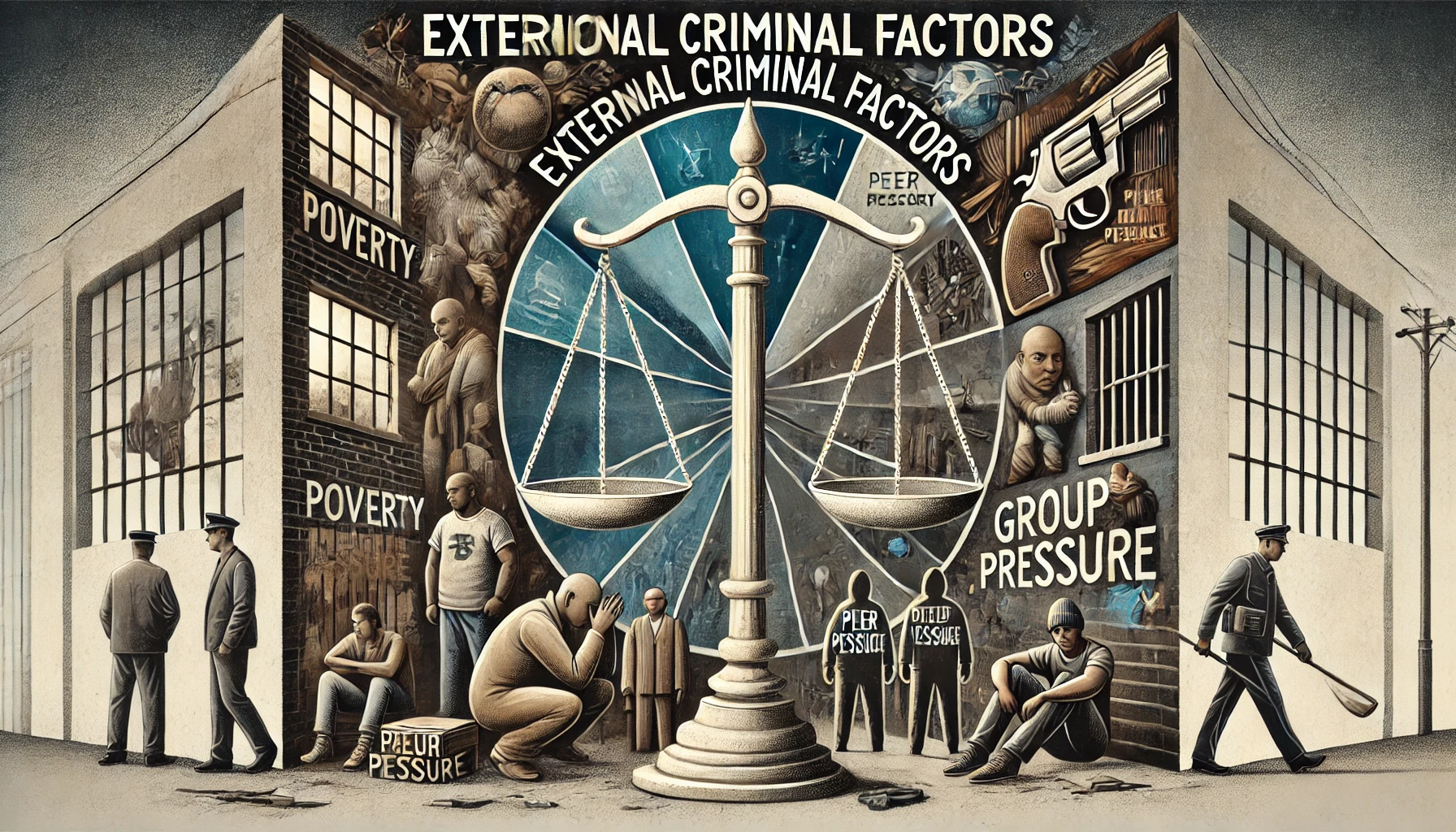
Introduction Criminology examines criminal behavior from various perspectives to understand its causes and evolution, aiming to reduce crime rates in society. One of the core aspects of this study involves external factors influencing criminal activity. These factors are considered external because they are tied to the individual’s surrounding environment rather than being under their direct … Read more

Factors of criminal behavior | Criminology

Factors of criminal behavior | Criminology

Introduction Crime is not merely an act that violates social norms but a complex phenomenon deeply intertwined with psychological, biological, and social factors. Understanding it requires an in-depth exploration of human behavior and environmental influences.Researchers categorize the factors leading to criminal behavior into two main types: individual factors, which stem from the individual’s innate and … Read more

Criminology schools | Psychoanalytic, formative, and social school

Schools of Criminology | Psychoanalytic, formative, and social school

Introduction Criminology is a vital tool for understanding and interpreting criminal behavior through scientific methods. One of the most effective approaches in this field is its classification into various schools of thought, each offering unique perspectives on crime. These schools provide analyses ranging from biological factors focusing on genetics and physical traits to psychological theories … Read more

The relationship of criminology to other sciences | criminal policy and others

The relationship of criminology to other sciences | Criminal policy

Introduction Criminology is the scientific study of crime, criminal behavior, and its impact on individuals and societies. This discipline explores the causes and motivations behind criminal acts, as well as their psychological, social, and legal dimensions. It also examines ways to prevent and address crime through laws and various penalties. The relationship between criminology and … Read more

Criminology | Scientific Research Methods

Criminology | Scientific Research Methods

In criminology, individual research methods are crucial for understanding and analyzing crime and its phenomena. Individual research contributes to analyzing criminal behavior, the causes of crime, and its consequences, providing a strong scientific foundation for the formulation of criminal justice policies. Researchers in this field rely on various methods, both quantitative and qualitative, to analyze … Read more

Methods of studying crime | Criminology

Methods of studying crime | Criminology

Introduction to Crime Study The study of crime in criminology is not just an attempt to understand the actions of individuals who commit criminal acts, but a journey to comprehend the roots of crime, its multiple environments, and the social, psychological, and biological factors that contribute to criminal behavior. Crime study methods vary between quantitative … Read more

The Role of Criminology in Understanding and Interpreting Criminal Behavior

The Role of Criminology in Understanding and Interpreting Criminal Behavior

1. Definition of Criminology A. What is Criminology?Criminology is a multidisciplinary study of crime, viewing it as a social, psychological, and legal phenomenon. This field focuses on analyzing and understanding criminal behavior scientifically, aiming to identify the factors that drive individuals to commit crimes. Unlike forensic sciences, which deal with criminal investigations and the implementation … Read more

Criminology: Definition, Scope, and Importance

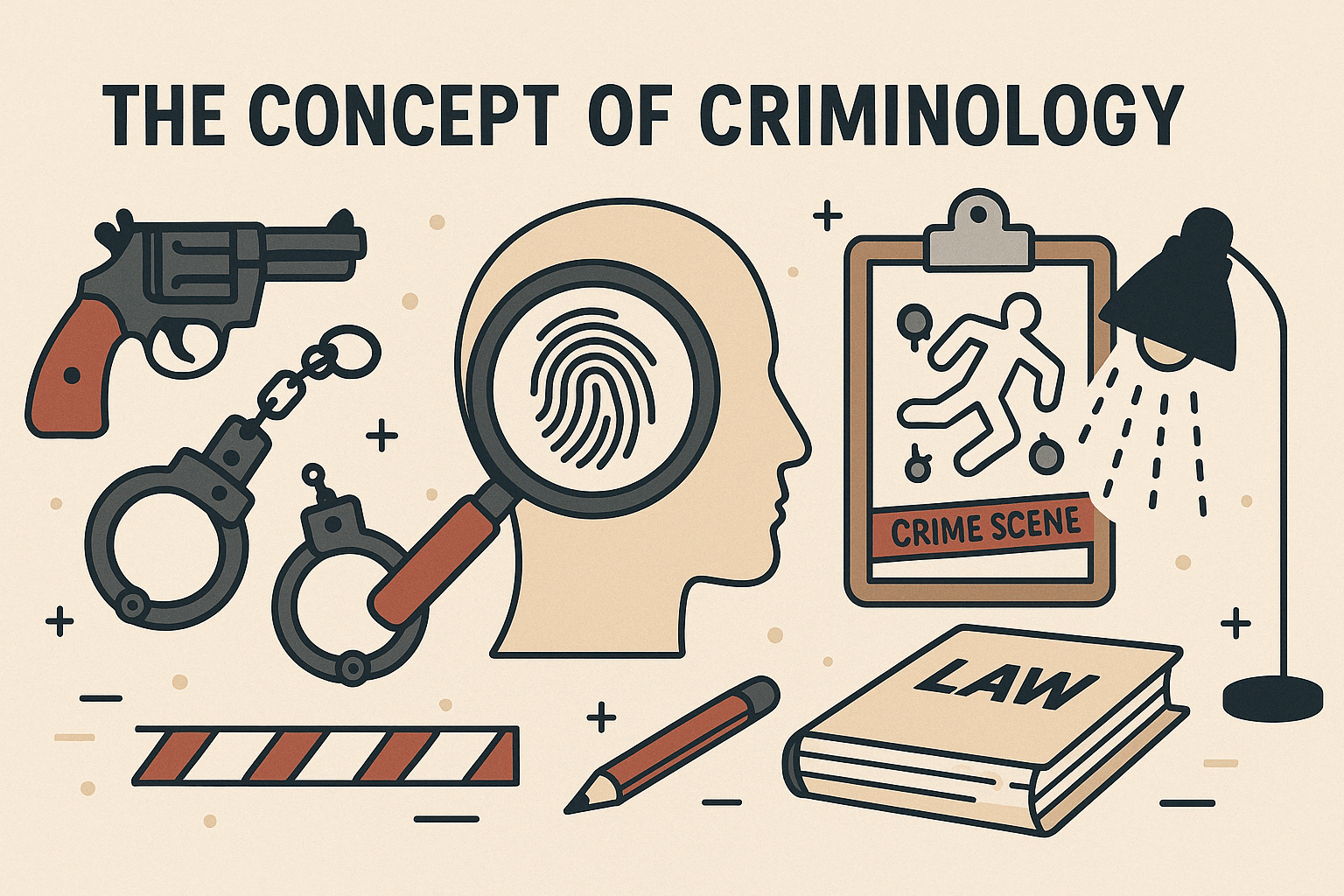
The image is a horizontal, flat-style digital illustration titled "The Concept of Criminology." It features key visual elements symbolizing criminology, including a revolver, a pair of handcuffs, a human head with a magnifying glass highlighting a fingerprint, a clipboard showing a crime scene outline, a law book, and a desk lamp shining on the evidence. The color palette includes shades of beige, black, red, and gray, creating a cohesive and professional look. These elements collectively represent the investigation, analysis, and legal framework central to the study of crime.

. Introduction to Criminology Criminology is a relatively modern social science focused on studying crime as a complex, multi-dimensional human behavior. This science aims to analyze the actions of individuals and institutions that lead to crime, understand the factors shaping criminal behavior, and develop strategies to address and prevent crime in the future. Criminology goes … Read more