

Introduction: Why Albert K. Cohen Still Matters in Criminology
Why do teenagers vandalize public property with nothing to gain? Why do working-class youths form gangs that seem to deliberately challenge every value mainstream society holds dear? These were not rhetorical questions for Albert K. Cohen — they were puzzles demanding a rigorous scientific answer.
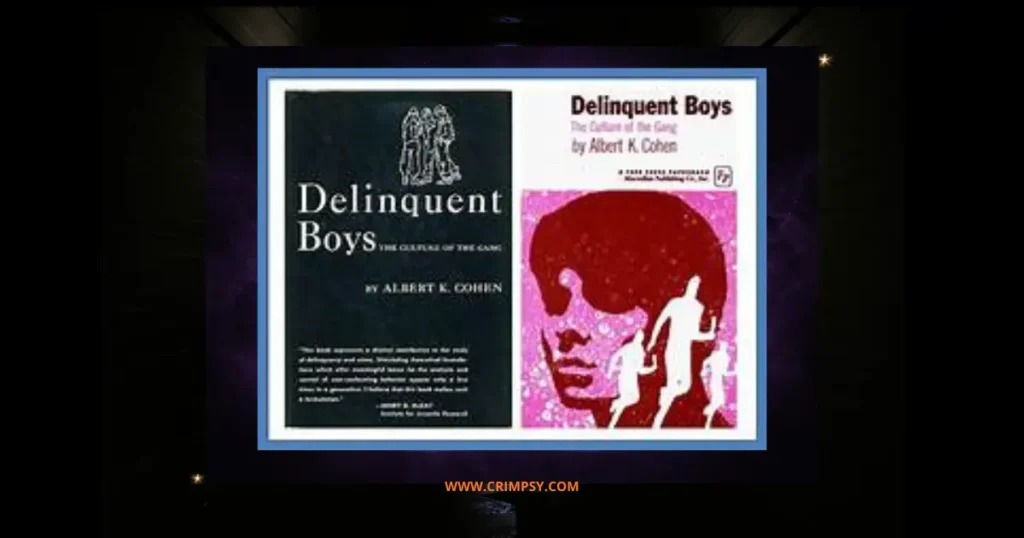
Cohen, one of the most influential American criminologists of the twentieth century, offered a theory that fundamentally changed how scholars, policymakers, and educators understand juvenile delinquency. His landmark 1955 book, Delinquent Boys: The Culture of the Gang, proposed that crime among young working-class males was not simply the result of poverty or greed. It was, Cohen argued, a collective cultural response to the frustration of being judged and found wanting by a society that set the rules of a game they were never meant to win.
This article provides a comprehensive examination of Albert K. Cohen’s life, theories, and legacy. It also situates his work within the broader landscape of criminological thought by comparing it with the ideas of other major thinkers — from Robert K. Merton and Edwin Sutherland to Richard Cloward, Lloyd Ohlin, Walter Miller, and David Matza. By understanding Cohen’s place in the intellectual history of criminology, we gain a far richer picture of why crime happens — and what society might do about it.
Who Was Albert K. Cohen? A Brief Biography
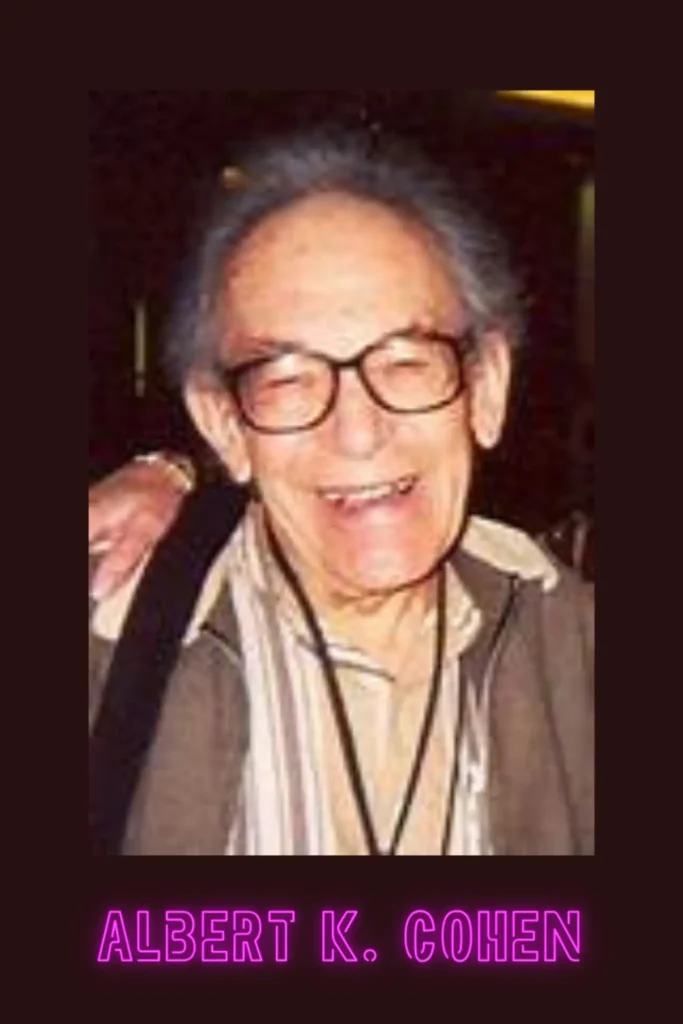
Albert Kircidel Cohen was born on June 15, 1918, in Boston, Massachusetts. He grew up in a Jewish neighborhood in Boston and attended Harvard University as an undergraduate, living at home with his parents during his studies. That formative environment — shaped by immigrant aspirations, class consciousness, and the social divisions of early twentieth-century America — arguably planted the seeds of his later intellectual interests.
After earning his undergraduate degree, Cohen moved to Indiana University, where he began graduate studies in sociology. It was there that he came under the mentorship of Edwin H. Sutherland, the towering figure of the Chicago School and the architect of differential association theory. Sutherland not only introduced Cohen to criminology as a discipline but also arranged for him to work at the Indiana Boy’s School at Plainfield, giving him direct experience with incarcerated delinquent youth. This hands-on exposure would prove invaluable for the theoretical work he was developing.
Cohen completed his master’s thesis in 1942, titled The Differential Implementation of Criminal Law, and later returned to Harvard for his doctoral studies. At Harvard, he worked with Robert K. Merton, whose strain theory would become a central — if also contested — point of reference in Cohen’s own theoretical work. Cohen completed his PhD in sociology from Harvard in 1951, and the dissertation he wrote — Juvenile Delinquency and the Social Structure — became the foundation for Delinquent Boys four years later.
He taught at Indiana University for nearly two decades before joining the faculty of the University of Connecticut in 1965, where he remained a professor of sociology until his retirement in 1988. In 1984, he served as Vice President of the American Society of Criminology, and in 1993 he received the society’s highest honor: the Edwin H. Sutherland Award, recognizing his outstanding contributions to criminological theory and research.
Albert K. Cohen died on November 25, 2014, in Chelsea, Massachusetts, at the age of 96.
The Intellectual Context: What Was Criminology Thinking Before Cohen?
To understand the originality of Cohen’s contribution, it is essential to understand the theoretical landscape he was entering. By the early 1950s, criminology had been dominated by two major traditions.
1. The Chicago School and Social Disorganization Theory
The Chicago School of Sociology, flourishing in the 1920s and 1930s, had produced a rich body of research linking crime to urban ecology. Scholars like Robert Park, Ernest Burgess, and later Clifford Shaw and Henry McKay argued that crime was not a product of individual pathology but of social disorganization — the breakdown of community institutions in rapidly changing, overcrowded urban neighborhoods.
Shaw and McKay’s 1942 work Juvenile Delinquency and Urban Areas demonstrated empirically that crime rates were consistently highest in the transitional inner-city zones, regardless of which ethnic groups lived there at any given time. This was a powerful argument that crime was a product of place, not people. Their theory of cultural transmission held that criminal values were passed from one generation to the next through neighborhood socialization.
2. Merton’s Strain Theory and Anomie
The other dominant framework was that of Robert K. Merton, Cohen’s own doctoral supervisor. In his landmark 1938 essay Social Structure and Anomie, Merton argued that American society placed enormous cultural emphasis on goals — particularly material success and the “American Dream” — while simultaneously denying the legitimate means to achieve those goals to significant portions of the population. This disjuncture between culturally prescribed goals and structurally available means produced what Merton called anomie (a concept he adapted from Émile Durkheim).
Merton identified five “modes of adaptation” to this strain: conformity, innovation, ritualism, retreatism, and rebellion. Crucially, innovation — accepting the goal of success but resorting to illegal means — explained much conventional acquisitive crime. Merton’s framework was elegant, but Cohen identified a serious gap in it: it could not explain why so much juvenile delinquency was non-utilitarian, malicious, and negativistic. Why would boys smash windows, set fires, or steal things they immediately discarded? There was no economic logic to it.
Albert K. Cohen’s Subcultural Theory: The Core Argument
Cohen’s great intellectual achievement in Delinquent Boys (1955) was to take the best insights of both the Chicago School and Merton’s strain theory and forge them into something new — a theory of delinquent subcultures built around the concept of status frustration.
The Middle-Class Measuring Rod
Cohen’s starting point was the observation that American schools function as institutions deeply embedded in middle-class values. Schools reward traits like:
- Academic achievement and intellectual ambition
- Deferred gratification (working now for future rewards)
- Respect for property and authority
- Verbal fluency and “appropriate” communication styles
- Self-discipline and emotional control
- Long-term planning and goal orientation
Working-class boys arrive at school having been socialized into a very different set of values at home — values shaped by immediate need, manual labor, physical toughness, and present-oriented thinking. When these boys are evaluated by teachers using what Cohen famously called the “middle-class measuring rod”, they consistently come up short. They experience academic failure, disciplinary problems, and a loss of self-esteem.
This is not, Cohen argued, simply a matter of individual inadequacy. It is a structural problem: working-class boys are being judged by rules they never helped write, using cultural capital they were never given the opportunity to accumulate.
Status Frustration
The result of this systematic underperformance and social devaluation is what Cohen called status frustration. These boys experience a profound and painful sense of inadequacy and exclusion. They cannot achieve the social status they desire through the legitimate channels that mainstream society offers — school success, professional achievement, respectable employment.
But human beings do not simply accept exclusion. They seek solutions. And the solution that Cohen identified was both creative and destructive: the formation of delinquent subcultures.
Reaction Formation and the Delinquent Subculture
Working-class boys experiencing status frustration seek out others who share their predicament. Together, they create alternative social groups — gangs and delinquent subcultures — that offer a radical solution to their problem. Cohen borrowed the psychoanalytic concept of reaction formation to describe what happens next.
Rather than aspiring to middle-class values and failing, the delinquent subculture inverts those values entirely. What mainstream society condemns becomes praiseworthy within the group. What the school rewards becomes contemptible. Vandalism, truancy, fighting, contempt for authority, and rule-breaking become not just accepted but actively celebrated as pathways to status and respect within the subculture.
As Cohen himself wrote in Delinquent Boys, the delinquent subculture is characterized by several defining features:
- Non-utilitarian: Crime is committed not for financial gain but for its own sake — for the thrill, for the status, for the sheer pleasure of transgression.
- Malicious: There is a deliberate pleasure in discomforting others and flouting conventional norms.
- Negativistic: The norms of the subculture are explicitly constructed as the opposite of the norms of mainstream society.
- Versatile: Delinquent activity ranges widely — theft, vandalism, fighting, truancy — rather than specializing in any one type of crime.
- Short-run hedonism: The subculture prioritizes immediate gratification over long-term planning.
- Group autonomy: The gang resists any form of external authority or control.
Within this inverted value system, the boy who was a “failure” by the middle-class measuring rod becomes a “success” by the measuring rod of the gang. He has found, through collective rebellion, a pathway to the self-esteem and recognition that mainstream society denied him.
Cohen’s Second Major Work: Deviance and Control (1966)
Beyond Delinquent Boys, Cohen extended his theoretical reach with Deviance and Control (1966), in which he developed a more general sociology of deviance. Here he examined how social control mechanisms — formal and informal — shape and constrain deviant behavior, and how societies define, label, and respond to those who violate their norms. This work anticipated later developments in labeling theory and showed Cohen’s continued engagement with the structural and cultural dimensions of crime and deviance.
Comparing Cohen with Other Major Criminologists
Cohen did not work in isolation. His ideas were shaped by, and in turn shaped, a rich tradition of criminological thought. Understanding Albert K. Cohen fully requires situating him among his most important intellectual interlocutors.
Edwin H. Sutherland and Differential Association Theory
Key Work: Principles of Criminology (1939); White Collar Crime (1949)
Sutherland, Cohen’s mentor at Indiana University, argued in his differential association theory that criminal behavior is learned, not inherited or invented. Individuals learn criminal techniques, motivations, attitudes, and rationalizations through intimate personal groups. The key variable is the ratio of “definitions favorable to violation of law” to “definitions unfavorable to violation of law” — if a person is more exposed to pro-criminal attitudes than anti-criminal ones, they are more likely to offend.
Cohen built on Sutherland by explaining how and why certain groups come to hold pro-criminal definitions in the first place. For Cohen, it is not random which groups develop criminal subcultures — it is those who have been systematically excluded from status by the dominant social structure. Sutherland explained the mechanism of learning; Cohen explained the social conditions that make criminal learning attractive.
Cause of Crime (Sutherland): Learned behavior through associations with criminal definitions in intimate groups.
Robert K. Merton and Strain Theory / Anomie
Key Work: Social Structure and Anomie (1938); Social Theory and Social Structure (1949)
Merton’s strain theory was both Cohen’s greatest inspiration and his most important point of departure. Both thinkers agreed that crime was a structural problem rooted in social inequality. But Cohen’s central criticism of Merton was that strain theory explained individual responses to blocked opportunity (particularly acquisitive, economically motivated crime) but could not account for the collective and non-utilitarian nature of much juvenile delinquency.
For Merton, the frustrated actor turns to crime to get the money or success that society denied them. For Cohen, the frustrated adolescent turns to crime to get the status and respect that society denied them — and does so not alone, but through collective subculture formation.
Cohen also argued that Merton’s framework implied a single dominant culture in American society, while Cohen’s insight was that the very existence of a dominant culture necessarily implies the existence of subcultures — a theoretical move that opened up an entire new field of inquiry.
Cause of Crime (Merton): Disjuncture between culturally prescribed goals (material success) and the unequal distribution of legitimate means to achieve them.
Richard Cloward and Lloyd Ohlin: Differential Opportunity Theory
Key Work: Delinquency and Opportunity: A Theory of Delinquent Gangs (1960)
Cloward and Ohlin extended Cohen’s subcultural framework by introducing the concept of differential opportunity structures. They agreed with Cohen that working-class youths were blocked from legitimate pathways to success. But they added a crucial observation: not all blocked youths have equal access to illegitimate opportunities either.
Depending on the local social environment, different types of delinquent subcultures emerge:
- Criminal subcultures — found in stable, organized slum neighborhoods where young men can be apprenticed into adult criminal networks (e.g., organized crime).
- Conflict subcultures — found in disorganized neighborhoods where no stable criminal network exists, and violence becomes the primary means of achieving status.
- Retreatist subcultures — composed of young people who have failed in both the legitimate and illegitimate opportunity structures and retreat into drug use and withdrawal from society.
Cloward and Ohlin thus refined Cohen’s model by asking not just why subcultures form, but what kinds of subcultures form under different structural conditions.
Cause of Crime (Cloward & Ohlin): Blocked access to both legitimate and illegitimate opportunity structures, producing different forms of subcultural adaptation.
Walter B. Miller and Lower-Class Focal Concerns
Key Work: Lower Class Culture as a Generating Milieu of Gang Delinquency (1958)
Walter Miller offered a significant challenge to Cohen’s framework. While Cohen argued that delinquent subcultures were reactions against middle-class values, Miller contended that lower-class culture had its own autonomous and long-standing value system — what he called focal concerns — that was quite independent of middle-class culture. These focal concerns included:
- Trouble (getting into and staying out of trouble)
- Toughness (physical prowess and masculinity)
- Smartness (the ability to outsmart others)
- Excitement (the quest for thrills and risk)
- Fate (a belief that life is governed by luck)
- Autonomy (freedom from external control)
For Miller, working-class youths did not need to rebel against middle-class values because they were simply following the values of their own culture — values that, when acted upon, frequently brought them into conflict with the law.
The debate between Cohen and Miller was fundamental: was delinquent subculture a reaction to mainstream culture (Cohen) or an expression of an independent lower-class culture (Miller)? This tension has never been fully resolved and continues to animate criminological debate.
Cause of Crime (Miller): Conformity to the independent focal concerns of lower-class culture, which frequently conflict with middle-class law.
David Matza and Delinquency and Drift
Key Work: Delinquency and Drift (1964); Becoming Deviant (1969)
David Matza offered one of the most penetrating critiques of Cohen’s work. In Delinquency and Drift, Matza argued that both Cohen and other subcultural theorists had made a fundamental error: they portrayed delinquents as committed to their deviant subculture, as if they had truly internalized an inverted value system. But Matza’s research suggested something far more nuanced: most delinquents were not deeply committed to crime. They drifted between conventional and delinquent behavior, bound to neither world.
Matza introduced the concept of techniques of neutralization (developed with Gresham Sykes) — the mental gymnastics through which delinquents suspend their moral commitments to allow for deviant acts: denying responsibility, denying injury, denying the victim, condemning the condemners, and appealing to higher loyalties. These techniques revealed that delinquents did hold conventional moral values — they simply had strategies for neutralizing them when convenient.
Matza also challenged Cohen’s image of the delinquent subculture as characterized by malice and negativism. Drawing on ethnographic research, he found that most delinquents were largely conventional in their values and spent most of their time in entirely conformist activities. The romanticized image of the committed gang member steadfastly inverting middle-class norms was, Matza suggested, a sociological artifact rather than an empirical reality.
Cause of Crime (Matza): Drift between conventional and deviant behavior, enabled by techniques of neutralization that temporarily suspend moral commitments.
Travis Hirschi and Social Bond Theory
Key Work: Causes of Delinquency (1969)
While Cohen and the subcultural theorists asked why people commit crime, Travis Hirschi reframed the question: why do most people conform? His social bond theory argued that delinquency occurs when an individual’s bonds to conventional society are weak or broken. These bonds consist of four elements: attachment (emotional ties to others), commitment (investment in conventional activities), involvement (time spent in legitimate pursuits), and belief (acceptance of conventional moral values).
For Hirschi, the subcultural theorists like Cohen had it backwards. The working-class boys who turned to delinquency did not do so because they formed a coherent inverted value system. They did so because their ties to conventional institutions — family, school, employment — were weak to begin with. Where Cohen emphasized the formation of delinquent culture, Hirschi emphasized the absence of social control.
This theoretical disagreement maps onto a broader debate in criminology: is crime explained by the presence of criminal motivation (Cohen, Merton) or the absence of conventional constraint (Hirschi)?
Cause of Crime (Hirschi): Weakening or absence of the social bonds that bind individuals to conventional society.
Howard Becker and Labeling Theory
Key Work: Outsiders: Studies in the Sociology of Deviance (1963)
Howard Becker approached crime from a completely different direction, focusing not on why people commit deviant acts but on how those acts come to be defined as deviant in the first place. His labeling theory argued that deviance is not an intrinsic property of an act but a social construction — a label applied by those with the power to define and enforce norms.
Once labeled as “delinquent” or “criminal,” individuals tend to internalize that identity and organize their subsequent behavior around it — a process Becker called secondary deviance. This insight posed a direct challenge to subculturalists like Cohen: was the delinquent subculture really a response to status frustration, or was it in part created by the labeling process itself — by schools, courts, and police who singled out working-class boys for scrutiny and punishment?
Becker’s work opened the door to a critical examination of who gets labeled and why — an examination that revealed the profound role of race, class, and power in the construction of the category of “criminal.”
Cause of Crime (Becker): The social application of the “deviant” label by powerful groups to the behavior of less powerful ones, creating self-fulfilling prophecies of criminal identity.

Critical Evaluation of Albert K. Cohen’s Theory
Cohen’s subcultural theory represented a genuine intellectual breakthrough, but it has not escaped criticism. Understanding these critiques is essential for assessing his lasting contribution.
Strengths
Explains non-utilitarian crime. Cohen’s theory succeeded brilliantly where Merton’s had failed: it provided a compelling account of vandalism, fighting, and other forms of delinquency that have no obvious economic motive. This remains one of the theory’s most enduring strengths.
Collective rather than individual. By emphasizing the group nature of delinquency, Cohen moved criminology beyond individualistic psychological explanations toward a genuinely sociological account. Delinquency is a social phenomenon that emerges from shared conditions and is expressed through collective action.
Integrates multiple traditions. The elegant synthesis of Chicago School cultural transmission theory, Mertonian strain theory, and Freudian psychology (reaction formation) was a remarkable theoretical achievement for its time.
Empirical plausibility. Generations of ethnographic researchers — from Paul Willis (Learning to Labour, 1977) to Philippe Bourgois (In Search of Respect, 1996) — have documented dynamics consistent with Cohen’s core insights about status, school failure, and gang formation.
Weaknesses
Gender blindness. Cohen’s exclusive focus on working-class boys is the most frequently cited weakness of his theory. He assumed, without adequate justification, that girls were less susceptible to status frustration because they could achieve status through relationships rather than occupational success. Subsequent feminist criminologists — including Pat Carlen, Jody Miller, and Carol Smart — have decisively challenged this assumption, showing that girls’ pathways into crime are equally shaped by class and gender inequality.
Determinism. Not all working-class boys who fail in school join delinquent gangs. Cohen’s theory struggles to explain why some boys respond with conventional acceptance, others with what he called “college-boy” adaptation, and only some with gang formation. Individual agency, psychological factors, and family dynamics receive insufficient attention.
Empirical challenges. David Matza’s research, and subsequent studies like Downes’ 1966 work on working-class adolescents in London, found limited evidence that delinquents experienced the kind of acute status frustration Cohen described, or that they consciously constructed inverted value systems in response.
Outdated class analysis. Cohen’s theory was built on the relatively rigid class structure of 1950s America. The fragmentation of class identities, the rise of multiple competing cultural frameworks, and the complexities of race, ethnicity, and immigration in contemporary societies make his model difficult to apply in unmodified form.
Middle-class bias. Some critics have argued that Cohen’s theory itself reflects a middle-class sociological gaze — that it pathologizes working-class culture by interpreting its distinctive values as merely a reaction to middle-class standards, rather than recognizing those values on their own terms (as Miller argued).
Cohen’s Legacy: Influence and Continuing Relevance
Despite these criticisms, the legacy of Albert K. Cohen in criminology is profound and enduring.
His concept of status frustration remains one of the most widely cited explanations for youth crime and gang formation. It has been applied not only to American juvenile delinquency but to gang cultures in the United Kingdom, Latin America, and beyond. Research consistently shows that school failure, social marginalization, and the search for alternative sources of status and respect are central dynamics in the formation of criminal peer groups.
Cohen’s theory has also influenced educational policy. If delinquency is rooted in the failure of educational institutions to meet the needs of working-class students, then school reform is a form of crime prevention. This insight — radical in the 1950s — has become a cornerstone of evidence-based approaches to reducing youth offending, including restorative justice programs, alternative educational pathways, and mentoring initiatives.
In the sociology of culture, Cohen’s theoretical move of treating subcultures as organized, internally coherent systems of meaning — rather than mere deviance from a norm — opened up an entire field of inquiry. The Birmingham Centre for Contemporary Cultural Studies (CCCS), active in the 1970s, drew directly on Cohen’s subcultural framework in its analyses of working-class youth cultures: mods, rockers, skinheads, punks. Stuart Hall and his colleagues gave Cohen’s insights a new critical edge, connecting subcultural resistance to race, class, and the political economy of postwar Britain.
The development of gang research as a distinct subfield of criminology is, in significant part, a product of Cohen’s work. Researchers like Malcolm Klein, Walter Miller, and more recently David Pyrooz and James Densley have built upon and revised Cohen’s framework in studying gang dynamics, gang membership, and gang desistance.
Conclusion: Albert K. Cohen and the Enduring Question of Social Justice
At its deepest level, the theory of Albert K. Cohen is not simply a theory of crime — it is a theory of social inequality and its consequences. It asks us to see delinquency not as a product of moral failure or individual pathology but as a rational response to the experience of exclusion, humiliation, and blocked aspiration.
When a working-class teenager vandalizes a bus shelter or steals a car he will never keep, Cohen invites us to ask: what social conditions produced that act? Who set the rules of this game? Who benefits from those rules, and who is systematically disadvantaged by them?
These are not comfortable questions. But they are necessary ones. And the fact that they remain as urgent today — in an era of growing inequality, educational failure, and social exclusion — as they were when Cohen first posed them in 1955 is perhaps the clearest measure of his enduring relevance.
From Edwin Sutherland’s learning theory to Merton’s anomie, from Cloward and Ohlin’s opportunity structures to Matza’s drifting delinquent, the conversation that Albert K. Cohen entered and transformed continues. His voice — insisting that crime must be understood as a social problem rooted in structural inequality — remains one of the most important in that conversation.
FAQ
Q: What is Albert K. Cohen’s theory of subcultural delinquency?
A: Cohen argued that working-class boys form delinquent subcultures as a collective response to status frustration caused by their inability to meet middle-class standards in school.
Q: What is status frustration in criminology?
A: Status frustration is the feeling experienced by working-class youths who cannot achieve social status through conventional means such as academic success.
Q: What is Albert K. Cohen’s most famous book?
A: Delinquent Boys: The Culture of the Gang (1955), in which he introduced subcultural theory and the concept of the middle-class measuring rod.
Q: How does Cohen’s theory differ from Merton’s strain theory?
A: Merton focused on individual responses to blocked economic goals, while Cohen emphasized collective subcultural responses to blocked status, especially non-utilitarian crime.
References
Cohen, A. K. (1955). Delinquent boys: The culture of the gang. Free Press.
Becker, H. S. (1963). Outsiders: Studies in the sociology of deviance. Free Press.
Cohen, A. K. (1966). Deviance and control. Prentice-Hall.
Cloward, R. A., & Ohlin, L. E. (1960). Delinquency and opportunity: A theory of delinquent gangs. Free Press.
Hirschi, T. (1969). Causes of delinquency. University of California Press.
Matza, D. (1964). Delinquency and drift. Wiley.
Merton, R. K. (1938). Social structure and anomie. American Sociological Review, 3(5), 672–682. https://doi.org/10.2307/2084686
Albert Bandura: Social Learning Theory and Crime
Miller, W. B. (1958). Lower class culture as a generating milieu of gang delinquency. Journal of Social Issues, 14(3), 5–19. https://doi.org/10.1111/j.1540-4560.1958.tb01413.x
Shaw, C. R., & McKay, H. D. (1942). Juvenile delinquency and urban areas. University of Chicago Press.
Sutherland, E. H. (1939). Principles of criminology (3rd ed.). J. B. Lippincott.
Sutherland, E. H. (1949). White collar crime. Dryden Press.
Sykes, G. M., & Matza, D. (1957). Techniques of neutralization: A theory of delinquency. American Sociological Review, 22(6), 664–670.
Willis, P. (1977). Learning to labour: How working class kids get working class jobs. Saxon House.
What Is Conflict Theory? Understanding Crime and Power in Society