

Introduction: What Lies in the Darkness of Human Personality?
Throughout the history of criminology, scholars have sought to understand what distinguishes individuals who consistently violate moral, social, and legal boundaries from those who do not. Among the most significant theoretical frameworks to emerge from this inquiry is the concept of the Dark Triad — a constellation of three personality traits that criminologists and psychologists now regard as among the most powerful predictors of antisocial and criminal behavior.
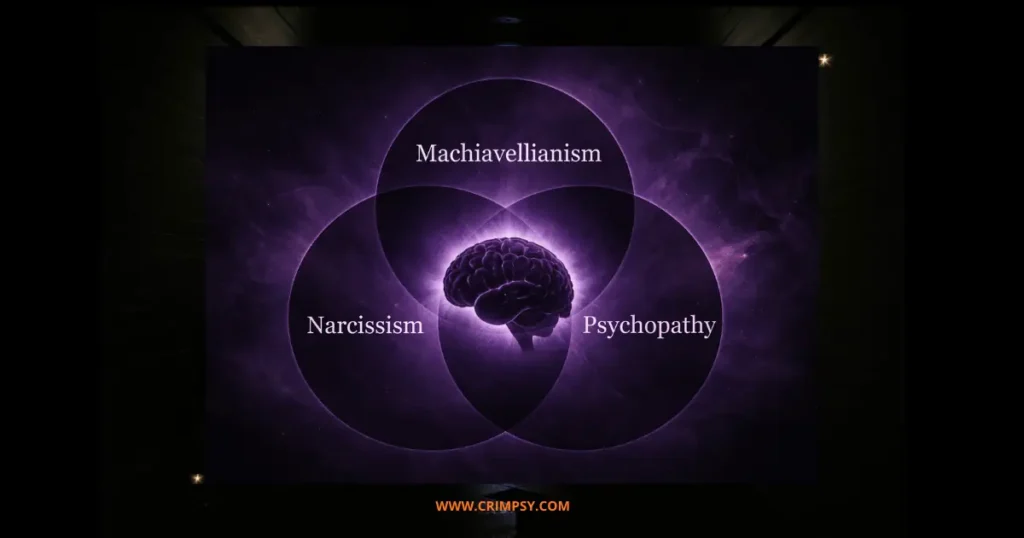
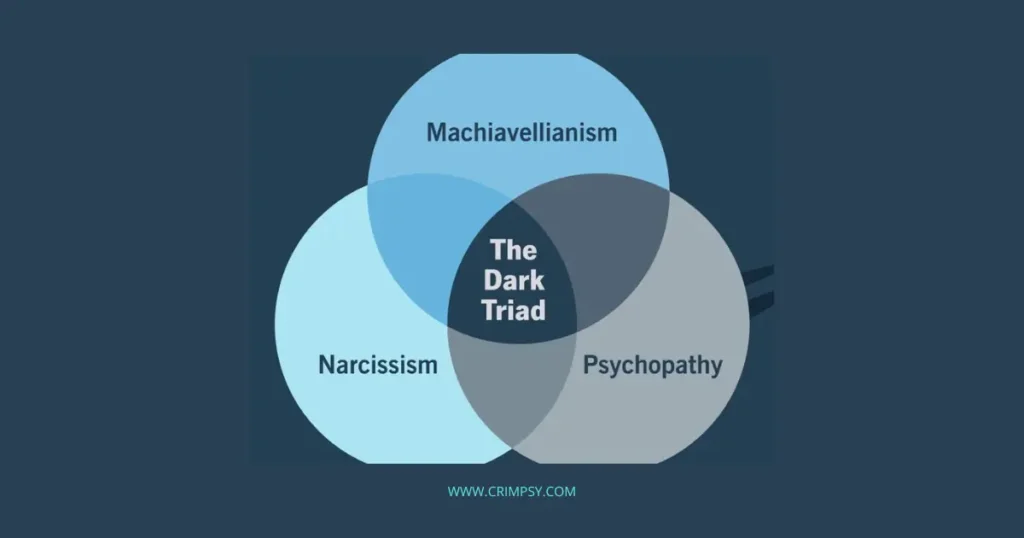
The term “Dark Triad” refers to a trio of negative personality traits — narcissism, Machiavellianism, and psychopathy — which share some common malevolent features. The construct was coined by researchers Delroy L. Paulhus and Kevin M. Williams in 2002.
Since its introduction, the Dark Triad framework has generated an extraordinary volume of scientific inquiry, spanning criminology, forensic psychology, organizational behavior, and evolutionary biology. It has fundamentally reshaped how researchers think about the relationship between personality and criminal conduct. This article offers a comprehensive criminological examination of the Dark Triad, analyzing each of its three components, their psychological foundations, their empirical links to criminal behavior, and their implications for crime prevention and criminal justice policy.
Part One: The Origins and Theoretical Foundation of the Dark Triad
1.1 The Birth of a Concept
The story of the Dark Triad begins not with a single dramatic discovery, but with decades of parallel research into three personality constructs that had long been studied independently. By the late 1990s, researchers had established that narcissism, Machiavellianism, and psychopathy each carried its own predictive weight in explaining manipulative, antisocial, and harmful behavior. What remained was to understand how these three traits related to one another and whether they formed a meaningful cluster.
Among the socially aversive personalities cited in the literature, three attracted the most empirical attention: Machiavellianism, narcissism, and psychopathy. Despite their diverse origins, these personalities share a number of features. To varying degrees, all three entail a socially malevolent character with behavior tendencies toward self-promotion, emotional coldness, duplicity, and aggressiveness.
Paulhus and Williams conducted the foundational empirical study, measuring all three traits in a sample of university students and mapping them onto established personality dimensions. Their conclusion was nuanced: they found enough behavioral, personality, and cognitive differences between the traits to suggest that they were distinct constructs, while also confirming significant empirical overlap.
1.2 Why “Dark”?
The label “dark” is not merely rhetorical. Each of these personality types is called dark because each is considered to contain malevolent qualities. All three dark triad traits are conceptually distinct although empirical evidence shows them to be overlapping. They are associated with a callous–manipulative interpersonal style.
What unifies the triad is not the presence of a single shared pathology, but rather a common orientation toward the world — one marked by the prioritization of self-interest at the expense of others, a reduced capacity for empathy, and a willingness to deceive, manipulate, or harm when it serves personal goals.
One of the primary observations that led to the treatment of the Dark Triad traits as a collective was that each trait is associated with disagreeableness. Subsequent work suggested that while disagreeableness might bind the Dark Triad traits, a tendency towards dishonesty and immodesty might bind them even more strongly. Taylor & Francis
Part Two: The Three Traits in Depth
2.1 Narcissism — The Grandiose Self
Definition and Characteristics
Narcissism is characterized by grandiosity, pride, egotism, and a lack of empathy. In its subclinical form — the form relevant to the Dark Triad — narcissism does not necessarily constitute a diagnosable disorder, but rather a stable personality orientation that shapes how an individual relates to others and interprets the world around them.
In psychology, narcissism is defined as excessive self-admiration and includes a pattern of attention-seeking behavior designed to win social approval. While a lack of empathy for others is a characteristic of narcissism, it is considered a definitive aspect of psychopathy.
Narcissistic individuals tend to believe they are exceptional and entitled to special treatment. They may respond with disproportionate anger or aggression when their inflated self-image is challenged — a phenomenon researchers call the “threatened egotism hypothesis,” which holds that narcissists become volatile when their self-esteem is threatened.
Narcissism and Criminal Behavior
The relationship between narcissism and criminality is more complex than it might initially appear. While narcissistic traits are associated with aggression and interpersonal conflict, narcissism tends to be the weakest predictor of criminal behavior among the three Dark Triad traits. Results from a large-scale meta-analysis indicated that higher Dark Triad scores are linked to increased criminal behavior (r = 0.23), with narcissism showing the weakest association (r = 0.16) among the three traits.
Nevertheless, narcissism plays a significant role in specific categories of crime. Research has linked narcissistic traits to intimate partner violence, stalking, and harassment — particularly in situations where the narcissistic individual perceives rejection or humiliation. The grandiose sense of entitlement characteristic of high-narcissism individuals can translate into a belief that rules do not apply to them, facilitating white-collar crime, fraud, and abuse of power.
2.2 Machiavellianism — The Calculating Manipulator
Origins and Conceptual Definition
The concept of Machiavellianism in psychology takes its name from the Renaissance political philosopher Niccolò Machiavelli, whose treatise The Prince advocated ruthless pragmatism in the pursuit of power. Machiavellianism is characterized by manipulativeness, indifference to morality, lack of empathy, and a calculated focus on self-interest.
People who score high on this trait are callous, unprincipled, and are excessively motivated by self-interest. They view interpersonal manipulation as the key to life success, and behave accordingly. Individuals measured to have a high level of Machiavellianism tend to have low agreeableness and conscientiousness.
What distinguishes Machiavellianism from psychopathy — with which it shares significant overlap — is the cognitive dimension. High Machs are calculating and strategic rather than impulsive. They plan, they delay gratification, and they engage in deliberate deception rather than reactive aggression.
Machiavellianism, Crime, and the Workplace
While all dark traits were positively associated with criminal behavior indicators, regression analyses in a study of Serbian prisoners identified Machiavellianism as the most prominent predictor of overall criminal behavior patterns. Springer
Machiavellian individuals are particularly implicated in financial crime, fraud, corporate misconduct, and organized deception. Machiavellians have been described as self-interested and open to unethical behavior, and higher levels of Machiavellianism have been identified in connection with unethical behavioral intentions within the workplace.
In organizational contexts, the Machiavellian personality type presents a distinctive challenge. Such individuals often rise to positions of authority through charm and strategic networking, concealing their exploitative tendencies beneath a veneer of competence and social intelligence.
2.3 Psychopathy — The Darkest of the Triad
Clinical and Subclinical Psychopathy
Most researchers consider psychopathy — a trait characterized by a lack of empathy and remorse — to be the “darkest” of the Dark Triad, insofar as psychopaths generally cause more harm to individuals and society than do narcissists or “High Machs.”
Psychopathy is a personality trait that involves a lack of empathy or remorse. People who have psychopathic tendencies can be bold and impulsive. And they’re often inclined toward negative, antisocial and criminal behavior. Cleveland Clinic
It is essential to distinguish between clinical psychopathy — associated with severe antisocial personality disorder — and the subclinical psychopathy measured by the Dark Triad framework. The latter refers to individuals in the general population who display psychopathic traits to a meaningful degree without necessarily meeting diagnostic criteria. Research consistently shows that subclinical psychopathy is far more prevalent than its clinical counterpart and accounts for a disproportionate share of harmful social behavior.
The Neuroscience of Psychopathy
Recent neuroimaging research has illuminated the biological underpinnings of psychopathic traits. Studies show structural and functional differences in the prefrontal cortex, amygdala, and related limbic structures — brain regions critical for impulse control, emotional processing, and moral reasoning. The engagement of psychopathic individuals in criminal activity causes societal monetary losses estimated at almost $500 billion.
Psychopathy and Crime: The Empirical Evidence
The empirical case linking psychopathy to criminal behavior is among the most robust in all of personality psychology. Psychopathy showed the strongest association with criminal behavior (r = 0.32) among the three Dark Triad traits, in a meta-analysis synthesizing 302 effect sizes from 39 studies across 15 countries involving 15,862 participants. ScienceDirect
Structural-equation-modelling procedures revealed that the psychopathy factor of Dark Triad traits presented the strongest significant hypothetical causal associations with antisocial and criminal outcomes, followed by self-control, while Machiavellianism and narcissism presented the lowest causal associations.
Part Three: The Dark Triad as a Unified Construct in Criminology
3.1 Convergence and Divergence
Although each trait has its own distinct profile and predictive pattern, criminological research increasingly treats the Dark Triad as a unified construct — a syndrome of personality characteristics that, taken together, substantially elevates the risk of antisocial and criminal behavior.
People with Dark Triad traits rank high in their readiness to exploit anyone from their closest family to their work colleagues to get ahead, and they experience very little remorse when they inflict harm on others. They can be incredibly duplicitous and aggressive.
The overlap between the traits is real but incomplete. Psychopathy and Machiavellianism share the capacity for cold, calculating behavior and lack of empathy. Narcissism and psychopathy both involve a positive self-view and resistance to guilt. But the traits diverge meaningfully on the dimension of impulsivity: psychopaths tend to be impulsive and reactive, while Machiavellians are deliberate and long-term in their strategic thinking.
This convergence does not imply uniformity. Instead, the Dark Triad should be understood as a spectrum of overlapping tendencies that manifest differently depending on situational and individual factors. For example, a highly narcissistic individual may engage in aggressive behavior primarily in response to ego threats, whereas a Machiavellian individual may engage in calculated deception for long-term gain. Recognizing these distinctions is essential for accurate profiling and intervention.
3.2 Measuring the Dark Triad
The development of reliable psychometric instruments has been essential to advancing Dark Triad research. The most widely used measures include the Narcissistic Personality Inventory (NPI), the MACH-IV scale, and the Self-Report Psychopathy Scale (SRP). In response to rising interest in the Dark Triad, researchers Peter K. Jonason and Gregory D. Webster developed a concise, 12-item measure of these personality traits called the “Dirty Dozen,” which offers a faster, easier way to identify the Dark Triad traits than testing for each trait individually. Psychology Today
3.3 Gender, Age, and the Dark Triad
Research consistently finds gender differences in Dark Triad traits. Sex differences emerged in neuroimaging studies, with males displaying notably higher Dark Triad scores. PubMed Central This pattern aligns with broader epidemiological data on gender and criminal offending, where males consistently show higher rates of antisocial behavior across most categories of crime.
Age is also a significant moderating factor. Dark Triad traits tend to be most pronounced in early adulthood and show some decline across the life course, particularly in narcissism and psychopathy. Research indicates that there is a consistent association between changes in agreeableness and the Dark Triad traits over the course of an individual’s life.
Part Four: Dark Triad and Specific Categories of Crime
4.1 Violent Crime and Aggression
The link between Dark Triad traits and violence is well established. Research has connected the triad to intimate partner violence, homicide, coercion, and harassment. Several studies have shown that the Dark Triad is a good predictor of coercion, stalking, harassment, bullying, problematic sexual behaviors, workplace bullying, and violence.
The mechanisms underlying this relationship are multiple. Psychopathic impulsivity reduces the behavioral inhibition that normally prevents violent responses. Narcissistic threatened egotism can trigger explosive reactions to perceived slights. Machiavellian manipulation can escalate into coercive control in intimate relationships.
Importantly, the relationship between the Dark Triad and violence is not deterministic but probabilistic. Possessing these traits does not guarantee criminal behavior; rather, it increases susceptibility under certain conditions, such as stress, provocation, or lack of social control. This distinction is crucial in avoiding overly deterministic interpretations that could lead to stigmatization or misuse in criminal profiling.
4.2 White-Collar Crime and Financial Fraud
The Dark Triad has received increasing attention in the study of white-collar crime. Individuals with psychopathic traits are known to use manipulation in order to obtain financial, professional, or personal gain, and psychopathic traits have been recognized as increasing the risk of fraud.
The corporate world may inadvertently select for Dark Triad traits. The charm, confidence, and strategic thinking characteristic of narcissistic and Machiavellian personalities can appear advantageous in competitive business environments. Researchers have linked these traits to both criminal behavior and high levels of success in business and politics, suggesting that individuals with these traits may excel in competitive environments.
4.3 Recidivism and Repeat Offending
One of the most criminologically significant findings concerns the relationship between Dark Triad traits and criminal recidivism. The binary logistic regression analysis showed that the variables which influenced recidivism in criminal behavior were the use of violence in the crime committed, antisocial personality traits, and mechanisms of moral disengagement such as advantageous comparison and dehumanization.
Part Five: Biological and Developmental Origins
5.1 Genetic Contributions
The question of whether Dark Triad traits are inherited has been examined through twin and behavioral genetic studies. Further research suggests that both narcissism and psychopathy appear to have genetic components, while Machiavellianism is more strongly correlated with an individual’s environment and upbringing.
The Dark Triad traits are partially heritable, as established in twin studies examining the relative contributions of genetic and environmental factors in their development.
5.2 Environmental and Developmental Factors
While genetics play a role, developmental experiences are equally important. Childhood trauma, neglect, inconsistent parenting, and early exposure to violence have all been associated with the emergence of Dark Triad traits. Research on callous-unemotional (CU) traits in children — which are strongly predictive of adult psychopathy — suggests that early identification and intervention may be possible.
The interplay between genetic vulnerability and environmental stress follows a diathesis-stress model: individuals with a biological predisposition to these traits are more likely to develop them fully if exposed to adverse developmental conditions.
Developmental criminology further emphasizes that early intervention can significantly alter these trajectories. Programs targeting emotional regulation, empathy development, and prosocial behavior in childhood have shown promise in mitigating the expression of callous-unemotional traits. This suggests that, despite biological predispositions, the developmental pathway toward dark personality traits is not fixed and can be influenced by targeted social and psychological interventions.
Part Six: The Dark Triad Beyond Crime — Success, Power, and Society
6.1 The Paradox of Dark Success
One of the most provocative findings in Dark Triad research is that these traits are not solely associated with criminal failure. On the contrary, they can confer substantial advantages in competitive social environments. The ongoing exploration of the Dark Triad continues to offer insights into human behavior across various domains, including law, business, and interpersonal relationships.
Narcissistic individuals project confidence and attract followers. Machiavellian strategists navigate political and corporate hierarchies with calculated precision. Even subclinical psychopaths can excel in high-stakes environments that reward emotional detachment — including law enforcement, surgery, and finance.
6.2 The Light Triad: A Counterpoint
Recent discussions have led to a broader understanding of personality dynamics, introducing concepts like the “light triad,” which encompasses more altruistic traits. The ongoing exploration of the Dark Triad continues to offer insights into human behavior across various domains. EBSCO
The Light Triad — comprising Kantianism (treating others as ends rather than means), humanism, and faith in humanity — represents the psychological opposite of the Dark Triad. Research on this construct helps contextualize the Dark Triad within the broader spectrum of human moral psychology.
6.3 The Dark Tetrad: Adding Sadism
Sadism predicts delinquent behavior separately from the other Dark Triad traits when evaluating high school students. Harmful behavior against living creatures, brutal and destructive amoral dispositions, and criminal recidivism are additionally more prominently predicted by sadism than psychopathic traits. Adding sadism results in a Dark Tetrad, also known as a “dark quad.” Wikipedia
Part Seven: Implications for Criminology and Criminal Justice
7.1 Risk Assessment and Profiling
The Dark Triad framework has significant practical applications in criminal justice. Personality assessments informed by Dark Triad measures can improve risk assessment in forensic settings, helping clinicians and probation officers identify individuals at elevated risk of reoffending.
Paying more attention to dark personalities in individuals at risk of criminal offending, together with acknowledging them in the offenders’ resocialization process, may help in reducing crime rates and especially reoffending behavior.
7.2 Intervention and Treatment
The treatment of Dark Triad-related criminal behavior presents significant clinical challenges. Psychopathic individuals, in particular, have historically been considered poor candidates for therapeutic intervention due to their manipulative tendencies and lack of genuine motivation for change. However, more recent research suggests that targeted cognitive-behavioral approaches, particularly those focusing on empathy development and impulse regulation, may produce measurable improvements.
Recent advances in forensic psychology have begun to challenge the long-standing pessimism surrounding the treatment of psychopathy. While traditional therapeutic approaches often fail, structured interventions that focus on behavioral management, reward-based systems, and cognitive restructuring have demonstrated limited but meaningful success. These findings suggest that even the most resistant personality profiles may be partially responsive to carefully designed intervention strategies.
7.3 Organizational Screening
In high-stakes organizational contexts — law enforcement, healthcare, financial services, positions of public trust — Dark Triad-informed screening protocols may help prevent individuals with dangerous personality profiles from accessing positions where they could cause significant harm. Law enforcement recruitment previously used personality inventories to examine personality characteristics and behavioral patterns of prospective employees, which could serve as a model for implementing such practices in corporate settings. Sage Journals
Conclusion: The Shadow Within
The Dark Triad represents one of criminology’s most powerful conceptual tools for understanding the personality architecture of harmful behavior. By mapping the intersection of narcissism, Machiavellianism, and psychopathy, researchers have illuminated a consistent psychological profile that underlies diverse forms of antisocial and criminal conduct — from interpersonal violence and financial fraud to organized crime and political corruption.
The empirical evidence is unambiguous: individuals scoring high on Dark Triad traits are significantly more likely to engage in criminal behavior, with psychopathy emerging as the strongest single predictor, followed by Machiavellianism and narcissism. The aggregate effect of the triad — when all three traits are present — is greater than the sum of its parts.
Yet the Dark Triad also reminds us of the complexity of human nature. The same traits that predispose toward crime can, under different circumstances, fuel exceptional achievement. This paradox does not diminish the criminological significance of the framework — but it does demand nuance, rigor, and humility in its application.
For criminologists, forensic psychologists, and criminal justice practitioners, the Dark Triad is not merely an academic abstraction. It is a lens through which the darkest corners of human personality can be examined — and, ultimately, understood.
Frequently Asked Questions (FAQ)
What is the Dark Triad in criminology? The Dark Triad is a psychological framework describing three overlapping personality traits — narcissism, Machiavellianism, and psychopathy — that are consistently linked to antisocial and criminal behavior. It was first formally described by Paulhus and Williams in 2002.
Which Dark Triad trait is most strongly linked to crime? Psychopathy shows the strongest association with criminal behavior, followed by Machiavellianism and then narcissism, according to a large-scale meta-analysis synthesizing data from 39 studies across 15 countries.
Are Dark Triad traits inherited or learned? Both factors play a role. Narcissism and psychopathy appear to have meaningful genetic components, while Machiavellianism is more strongly influenced by environmental and developmental factors.
Can someone with Dark Triad traits be successful? Yes. Research shows that Dark Triad traits can confer advantages in competitive environments, including business and politics. However, this success is often achieved at significant cost to others and tends to be unstable over the long term.
What is the difference between the Dark Triad and the Dark Tetrad? The Dark Tetrad adds sadism to the three core Dark Triad traits. Sadism — deriving pleasure from the suffering of others — predicts certain forms of criminal behavior, particularly violence, independently of the other three traits.
References
Paulhus, D. L., & Williams, K. M. (2002). The Dark Triad of personality: Narcissism, Machiavellianism, and psychopathy. Journal of Research in Personality, 36(6), 556–563.
Christie, R., & Geis, F. L. (1970). Studies in Machiavellianism. Academic Press.
Hare, R. D. (1985). Comparison of procedures for the assessment of psychopathy. Journal of Consulting and Clinical Psychology, 53(1), 7–16.
Raskin, R., & Hall, C. S. (1979). A narcissistic personality inventory. Psychological Reports, 45(2), 590.
Hampejs, V., Zwickl, A. A., Tran, U. S., & Voracek, M. (2025). The Dark Triad of personality and criminal and delinquent behavior: Preregistered systematic review and three-level meta-analysis. Personality and Individual Differences, 246, 113308. https://doi.org/10.1016/j.paid.2025.113308
Jonason, P. K., & Webster, G. D. (2010). The Dirty Dozen: A concise measure of the Dark Triad. Psychological Assessment, 22(2), 420–432.
Muris, P., Merckelbach, H., Otgaar, H., & Meijer, E. (2017). The malevolent side of human nature: A meta-analysis and critical review of the literature on the Dark Triad. Perspectives on Psychological Science, 12(2), 183–204.
Amos, B., Longpré, N., de Roos, M. (2024). The Dark Triad of personality: Attitudes and beliefs towards white-collar crime. International Journal of Offender Therapy and Comparative Criminology. https://doi.org/10.1177/2631309X221120002
Mededovic, J., & Petrovic, B. (2024). Machiavellianism as a crucial Dark Tetrad trait for the prediction of life-course criminal behavior. Current Psychology. https://doi.org/10.1007/s12144-024-06500-9
O’Boyle, E. H., Forsyth, D. R., Banks, G. C., & McDaniel, M. A. (2012). A meta-analysis of the Dark Triad and work behavior: A social exchange perspective. Journal of Applied Psychology, 97(3), 557–579.
Vernon, P. A., Villani, V. C., Vickers, L. C., & Harris, J. A. (2008). A behavioral genetic investigation of the Dark Triad and the Big 5. Personality and Individual Differences, 44(2), 445–452.
Furnham, A., Richards, S. C., & Paulhus, D. L. (2013). The Dark Triad of personality: A 10-year review. Social and Personality Psychology Compass, 7(3), 199–216.
Kiehl, K. A., & Hoffman, M. B. (2011). The criminal psychopath: History, neuroscience, treatment, and economics. Jurimetrics, 51, 355–397.
Bandura, A. (1990). Mechanisms of moral disengagement in the exercise of moral agency. Journal of Personality and Social Psychology, 71(2), 364–374.
Paulhus, D. L. (2014). Toward a taxonomy of dark personalities. Current Directions in Psychological Science, 23(6), 421–426.