
Biological Criminology: How Our Biology Shapes Criminal Behavior
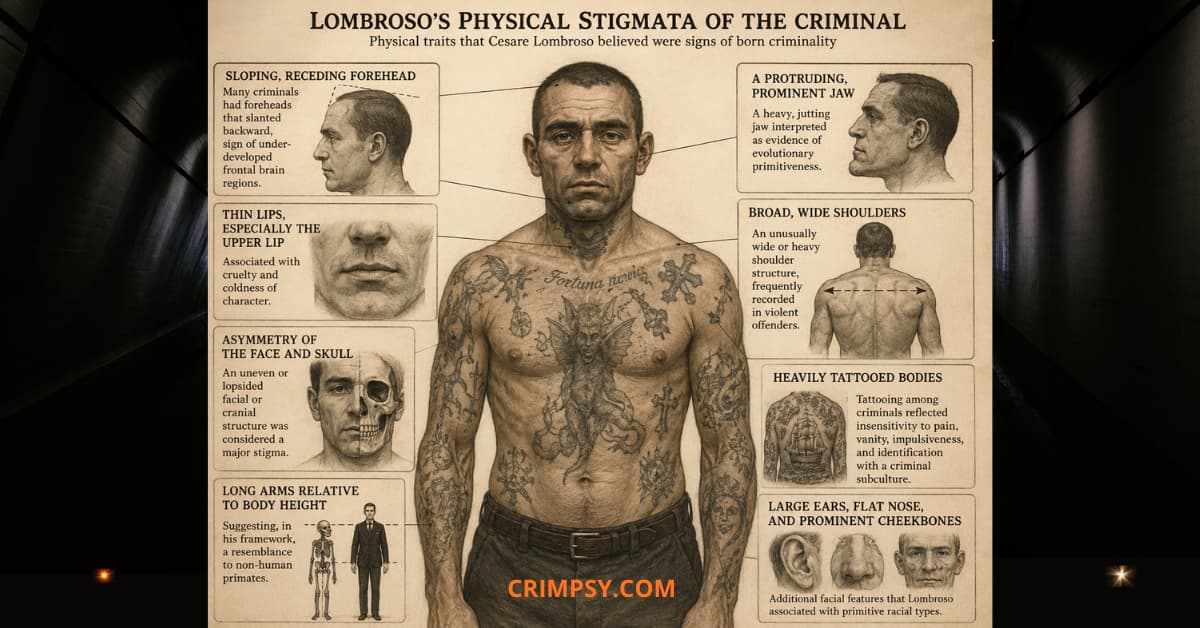
Vintage criminology illustration showing Cesare Lombroso’s theory of criminal physical characteristics, including tattoos, asymmetrical face, prominent jaw, receding forehead, and broad shoulders.

Is crime written in our DNA? Can brain structure predict violence? Biological criminology explores the science behind these provocative questions — and the answers are more nuanced than you might expect. What Is Biological Criminology? Biological criminology is a sub-field of criminology that examines the role of biological factors — including genetics, neuroscience, hormones, and … Read more
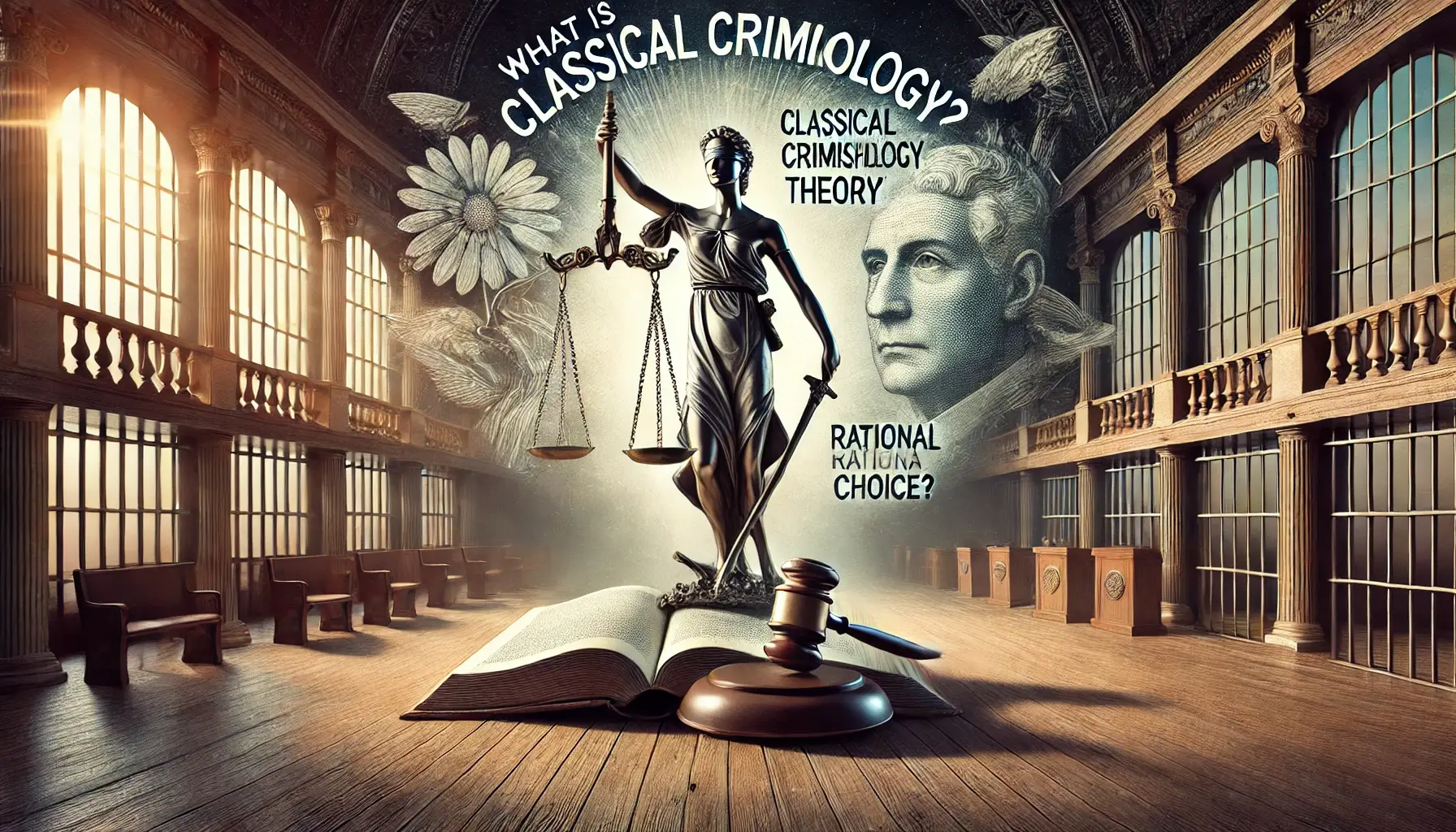

What Is Classical Criminology Theory?

A conceptual representation of Classical Criminology Theory. An Enlightenment-era philosopher, possibly Cesare Beccaria, is writing in a candlelit study filled with old books and a quill pen. In the background, silhouettes of crime and justice, including a courthouse and a scale of justice, symbolize rational choice and legal reforms.

Introduction to Classical Criminology Theory Classical criminology theory is a framework in criminology that emerged in the 18th century as a response to arbitrary and harsh criminal justice systems. It is based on the principles of free will, rational choice, and deterrence. This theory emphasizes that individuals commit crimes as a result of rational decision-making, … Read more

Differential Association Theory: A Comprehensive Analysis

Illustration of Differential Association Theory showing social learning of crime

Introduction: Differential Association Theory Differential Association Theory is one of the most influential theories in criminology. Developed by Edwin Sutherland, this theory provides a sociological perspective on criminal behavior, arguing that crime is learned through social interactions rather than being an inherent trait. This theory is particularly relevant in understanding various types of criminal activities, … Read more