
The Criminal Mind Between Freedom and Determinism: Crimpsy
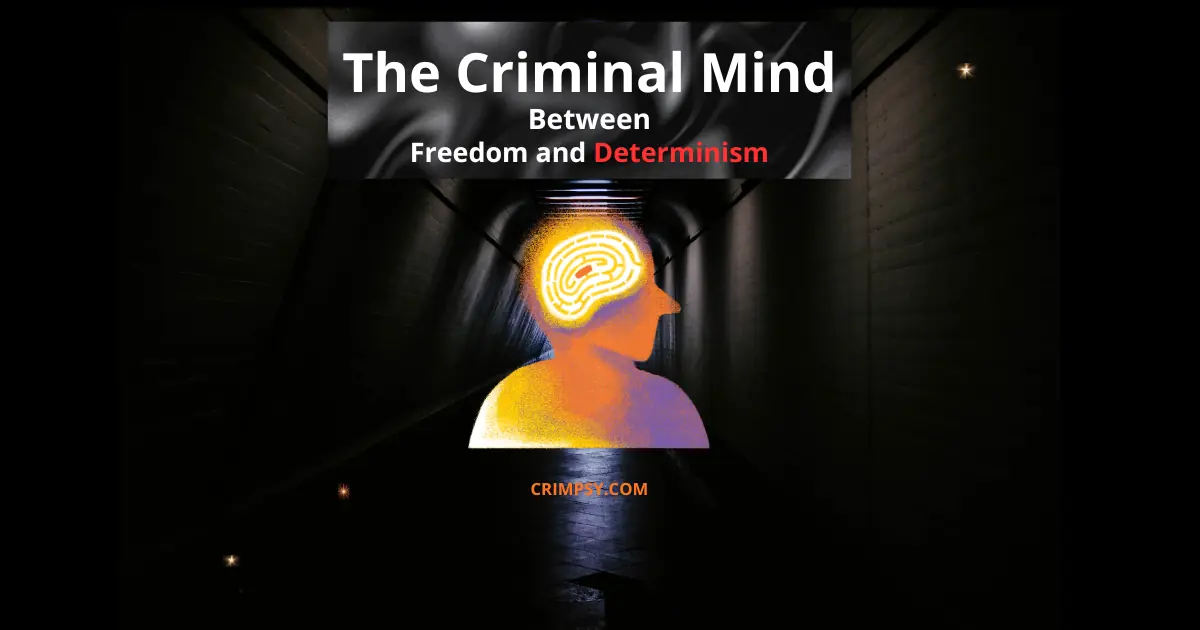
Conceptual illustration of the criminal mind showing the tension between freedom and determinism, with a glowing brain inside a human silhouette in a dark tunnel

Few questions in the history of human thought have proven as enduring — or as consequential — as the question of why people commit crimes. Is the criminal a free moral agent who deliberately chooses to transgress the law, fully aware of the harm their actions cause? Or are they, to a significant degree, a … Read more
The Statistical Method and the Interrogative Method in Criminology

A black-and-white hand-drawn illustration showing an interrogator and a suspect. The diagram highlights three steps of the interrogation method: open-ended questions, psychological pressure, and breaking silence.

Introduction Criminology is the scientific study of crime, criminal behavior, and the criminal justice system. It aims to analyze the causes, nature, and consequences of criminal acts in society. Within this field, researchers use various tools to uncover patterns, test theories, and interpret criminal phenomena. Two core methodologies dominate criminological research: the statistical method and … Read more

Schools of Criminology: A Comprehensive Analysis of Theories

Schools of Criminology: A Comprehensive Analysis of Theories and Ideas

Criminology, as a field, encompasses diverse schools of thought that provide varied perspectives on crime and criminal behavior. From biological explanations to sociological frameworks, these schools of thought reflect the evolving understanding of crime over time. This article delves into the major schools of criminology, analyzing their foundational theories and contributions to the field. 1. … Read more