Biological Criminology: How Our Biology Shapes Criminal Behavior
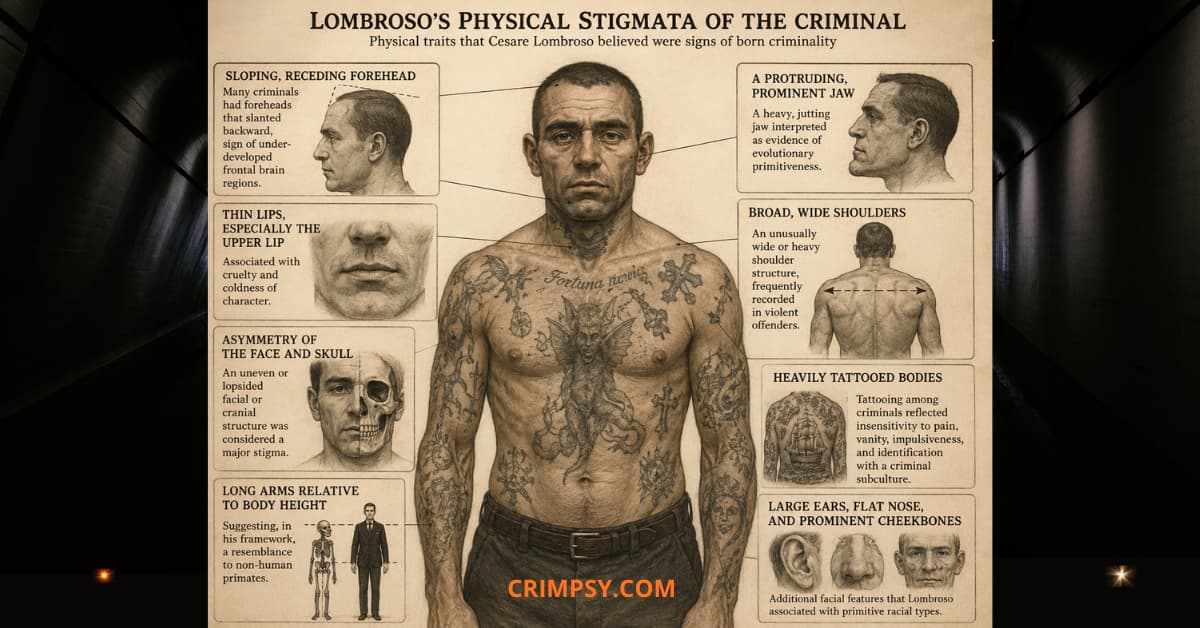
Vintage criminology illustration showing Cesare Lombroso’s theory of criminal physical characteristics, including tattoos, asymmetrical face, prominent jaw, receding forehead, and broad shoulders.

Is crime written in our DNA? Can brain structure predict violence? Biological criminology explores the science behind these provocative questions — and the answers are more nuanced than you might expect. What Is Biological Criminology? Biological criminology is a sub-field of criminology that examines the role of biological factors — including genetics, neuroscience, hormones, and … Read more

The Criminal Mind Between Freedom and Determinism: Crimpsy

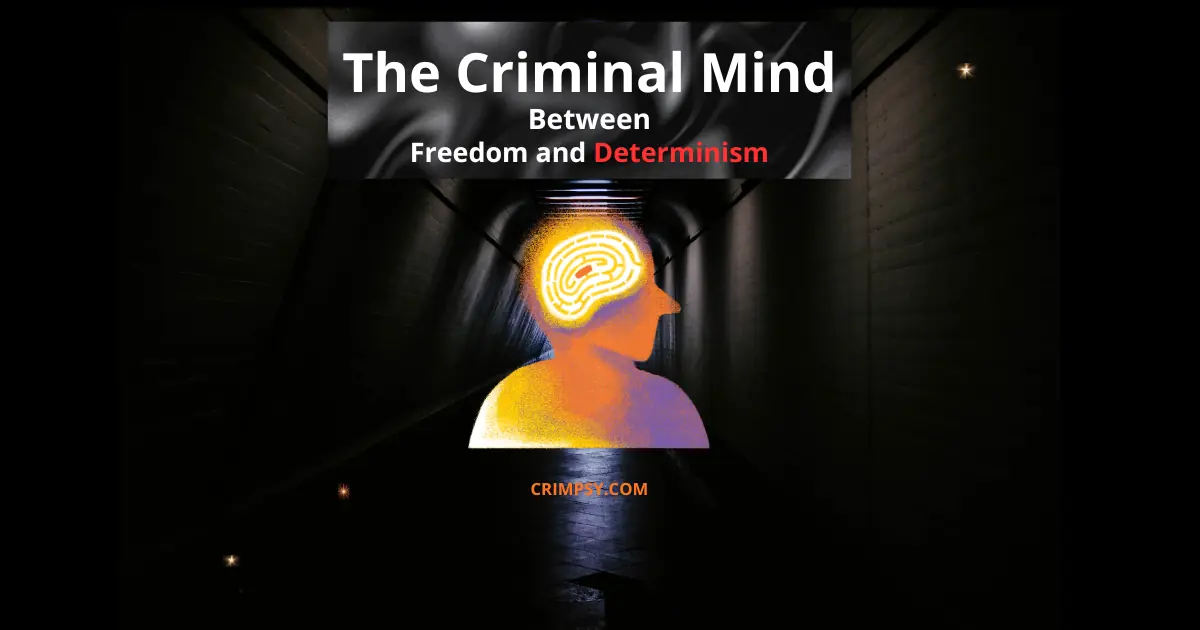
Conceptual illustration of the criminal mind showing the tension between freedom and determinism, with a glowing brain inside a human silhouette in a dark tunnel

Few questions in the history of human thought have proven as enduring — or as consequential — as the question of why people commit crimes. Is the criminal a free moral agent who deliberately chooses to transgress the law, fully aware of the harm their actions cause? Or are they, to a significant degree, a … Read more

The Dark Triad: Narcissism, Machiavellianism & Psychopathy in Criminology

Three intersecting circles representing Narcissism, Machiavellianism, and Psychopathy in a psychological model

Introduction: What Lies in the Darkness of Human Personality? Throughout the history of criminology, scholars have sought to understand what distinguishes individuals who consistently violate moral, social, and legal boundaries from those who do not. Among the most significant theoretical frameworks to emerge from this inquiry is the concept of the Dark Triad — a … Read more

Psychopathy in Criminology: Theoretical Foundations, Diagnostic Methods, and Criminal Implications

Image produced by CRIMPSY.COM about psychopathy

Introduction to Psychopathy Psychopathy is one of the most complex, controversial, and deeply studied constructs in criminology. It represents a profound disturbance in personality functioning, characterized by emotional detachment, lack of empathy, superficial charm, manipulation, pathological lying, impulsivity, and a striking absence of remorse. Although the term itself has roots in early psychiatric traditions, its … Read more

Schizophrenia and Psychopathy in Criminology: A Comparative Analysis

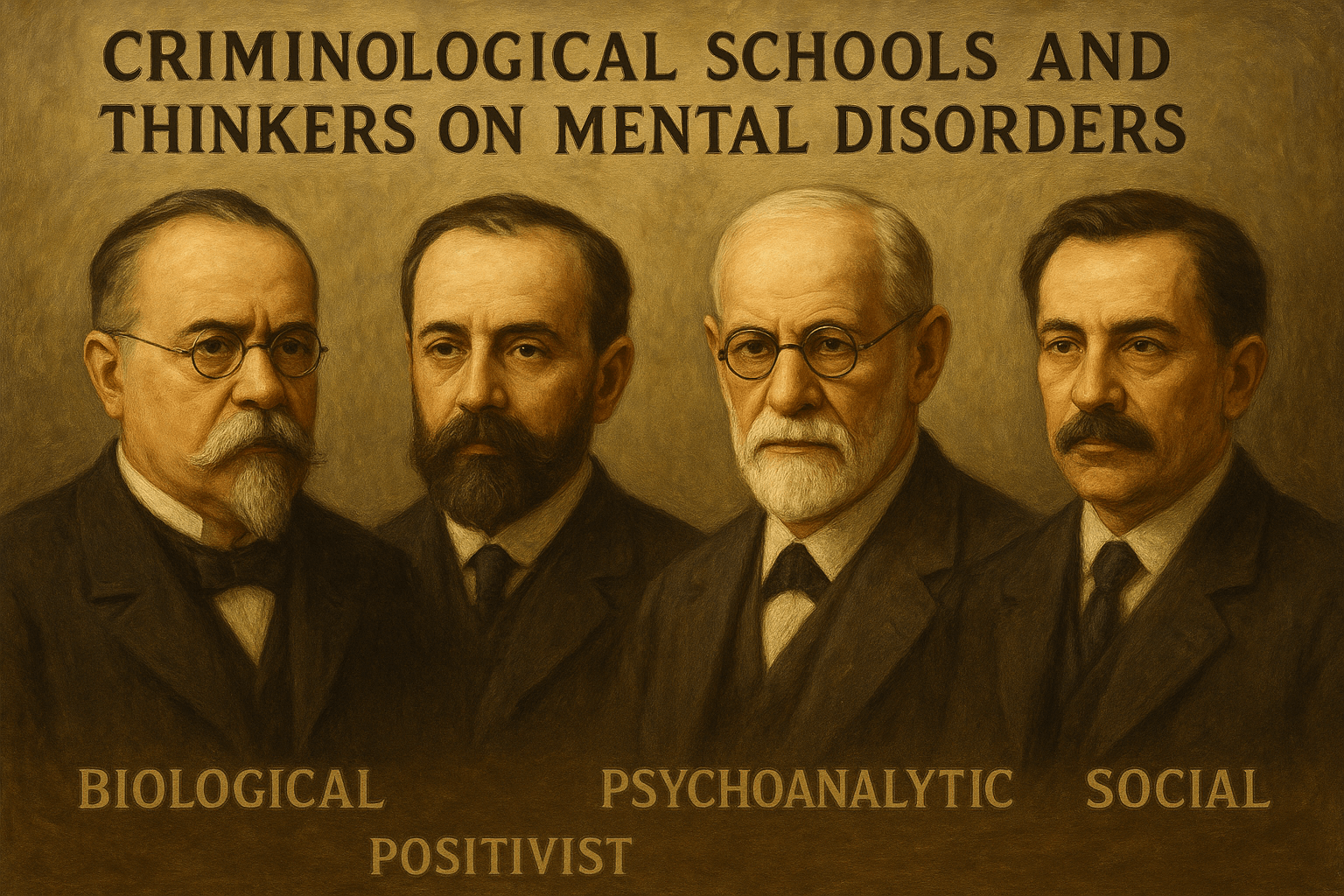
A historical-style painting depicting Cesare Lombroso, Enrico Ferri, Sigmund Freud, and another thinker, each representing different criminological schools—Biological, Positivist, Psychoanalytic, and Social—highlighting their contributions to the study of mental disorders in criminology.

Introduction: Schizophrenia and Psychopathy The study of criminal behavior has always been closely linked with the understanding of human psychology and mental health. From the earliest days of criminology, scholars have attempted to explain why certain individuals engage in deviant or violent acts while others, despite facing similar conditions, do not. Within this context, the … Read more

Neurocriminology: Understanding the Brain’s Role in Criminal Behavior

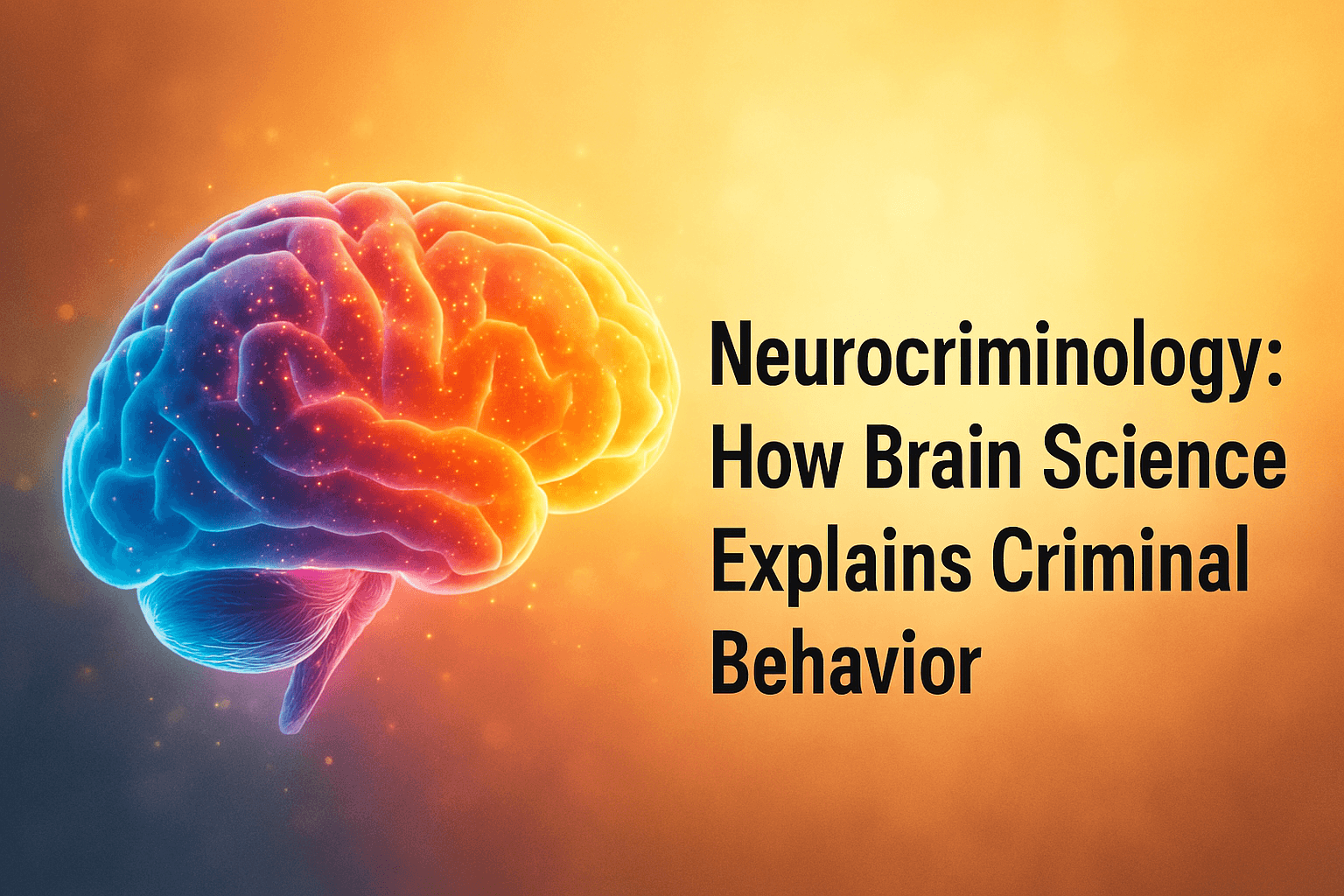
Exploring Neurocriminology through brain imaging and neuroscience, revealing the biological basis of criminal actions.

Introduction to Neurocriminology Neurocriminology is an interdisciplinary field that merges neuroscience, psychology, and criminology to explore the biological and neurological underpinnings of criminal behavior. With advancements in brain imaging technology and genetics, researchers are uncovering critical insights into how brain structure, function, and genetic predispositions contribute to violent and antisocial behaviors. This article delves into … Read more