
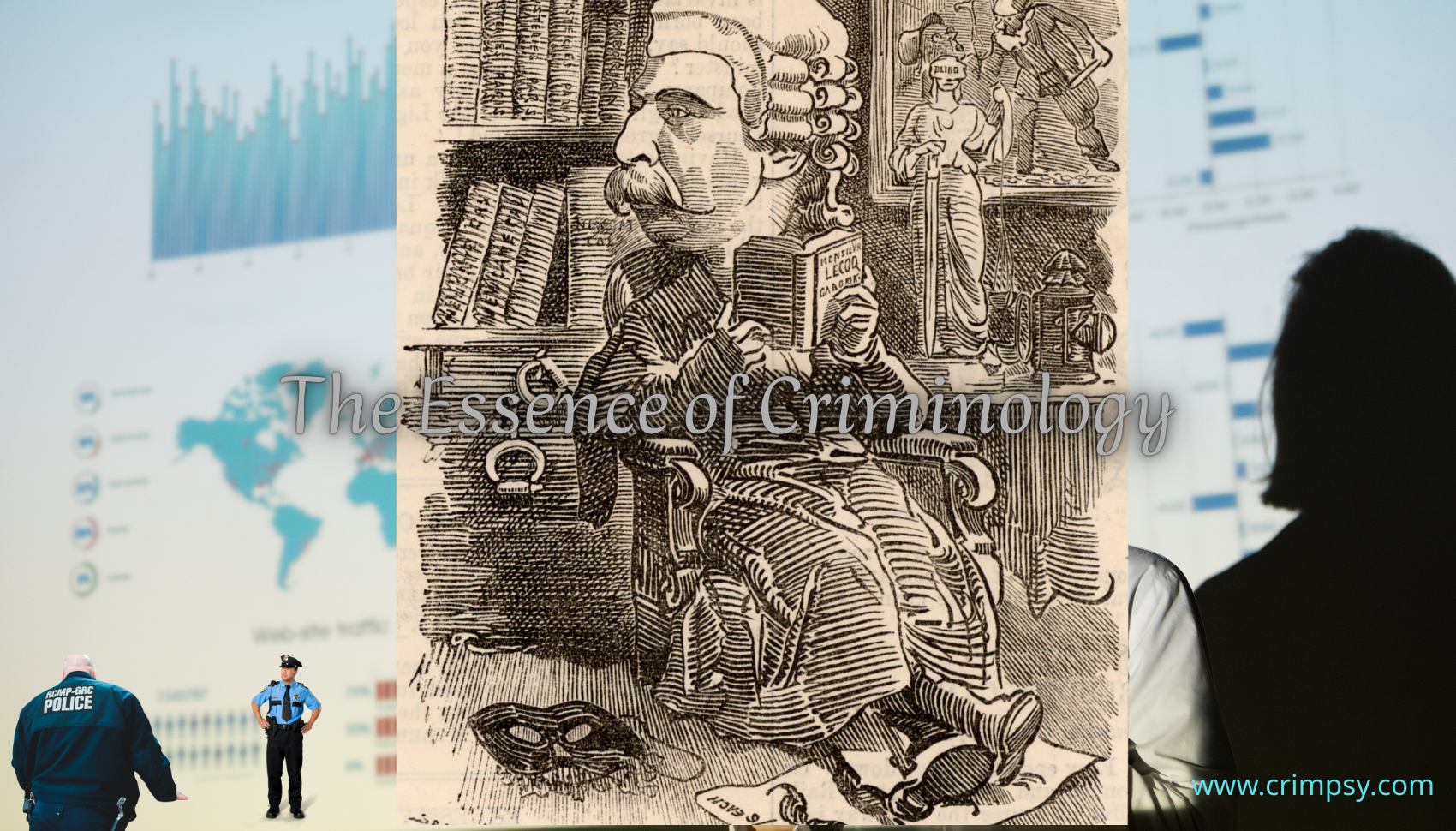
Crime has always represented one of the most complex and troubling phenomena facing human societies. From ancient civilizations to modern nation-states, communities have continuously sought to understand why individuals engage in behavior that violates social norms, disrupts public order, and threatens collective security. As societies evolved and crime took on increasingly diverse forms—ranging from traditional offenses to technologically sophisticated crimes—the need for a scientific discipline capable of analyzing, explaining, and predicting criminal behavior became not only necessary but urgent. This general context laid the foundation for the emergence of criminology as a specialized field that brings together insights from sociology, psychology, law, economics, biology, and anthropology to explore the nature of crime and its underlying causes.
However, several fundamental questions still arise when examining the field of criminology:
What is criminology, and how have scholars defined it across different periods and schools of thought?
Does criminology truly possess an independent scientific character, or does it remain a multidisciplinary field drawing on adjacent sciences?
What is the scientific value of criminology in understanding crime, preventing deviant behavior, and guiding criminal justice policies?
And finally, what are the main objectives that criminology seeks to achieve in its attempt to explain, predict, and reduce criminal phenomena?
These guiding questions shape the central problem of this study, which can be formulated as follows:
To what extent does criminology represent a coherent scientific discipline capable of explaining criminal behavior, and what is its significance in understanding the causes, contexts, and consequences of crime in contemporary society?
In order to address this problem, the present research will be structured according to the following design:
Section One: Defining Criminology
– Expanded definitions
– Narrow definitions
Section Two: The Scientific Nature of Criminology
– The perspective opposing the scientific nature of criminology
– The perspective supporting the scientific character of criminological studies
Section Three: The Importance of Criminology
– The preventive role
– The therapeutic (rehabilitative) role
Section Four: The Objectives of Criminology
– Analyzing environmental, social, familial, and economic factors influencing crime

Section One: Defining Criminology
First Paragraph: Expanded Definitions of Criminology
Broad definitions of criminology have been strongly shaped by several influential thinkers who expanded the boundaries of the field and emphasized its interdisciplinary nature. Among these, Enrico Ferri, one of the major representatives of the Italian Positive School, defined criminology as the science that studies the criminal phenomenon in all its social, biological, and psychological dimensions. Ferri argued that crime must be understood through the interplay of multiple factors, shifting the focus from purely legal definitions to a scientific understanding of behavior, environment, and societal conditions. His definition greatly broadened criminology’s horizons by incorporating anthropology, sociology, economics, and psychology into the study of crime.
Similarly, Hans Gross, considered one of the founding fathers of criminalistics, offered another expanded definition. Gross believed that criminology should encompass all scientific methods and knowledge capable of aiding in the investigation, understanding, and explanation of criminal behavior. His definition was deeply practical, integrating forensic science, psychology, observation techniques, and investigative methods into criminology. Through Gross’s contributions, criminology became linked with empirical techniques and interdisciplinary scientific inquiry.
Grasberger , a prominent German scholar, emphasized criminology as the comprehensive study of the causes of crime and the conditions that foster its development. He saw crime as a social phenomenon shaped by economic, cultural, and environmental influences, and therefore insisted that criminology must integrate insights from social sciences to understand criminal behavior. This perspective further reinforced the broad, holistic conception of criminology as a multidimensional field.
Perhaps the most influential modern thinker in expanding the definition of criminology is Edwin Sutherland, whose concept of Differential Association radically reshaped criminological thought. Sutherland defined criminology as the body of knowledge regarding crime as a social phenomenon, including the processes of making laws, breaking laws, and reacting to the breaking of laws. This definition is one of the broadest in the entire field of criminology. It recognizes that crime cannot be understood solely through the offender; society’s norms, moral boundaries, laws, and reactions are equally important. Sutherland’s definition remains central in contemporary criminological literature because it integrates sociology, law, and behavioral science into a single coherent framework.
Through these expanded definitions—Ferri’s biopsychosocial approach, Gross’s scientific-investigative perspective, Grasberger’s social causation view, and Sutherland’s sociological understanding—criminology emerges as a broad, interdisciplinary science that examines crime as a dynamic phenomenon shaped by individual traits, environmental factors, social interactions, legal structures, and cultural norms.
Second Paragraph: Narrow Definitions of Criminology
Narrow definitions of criminology place limits on the scope of the field and focus primarily on understanding the causes of criminal behavior, rather than including societal reactions or policy implications. One of the most cited narrow definitions comes from the French jurist Guillaume-Camille Koch, who argued that criminology is the science that studies the causes of crime with the aim of identifying factors that predispose individuals to commit criminal acts. According to Koch, criminology’s primary objective is causal explanation rather than examining lawmaking, punishment, or victimization. His definition is therefore concerned mainly with offenders and the internal or external influences that lead them toward criminal behavior.
Other jurists and scholars within the narrow-definition school share similar viewpoints. They argue that criminology should not be diluted by the inclusion of fields such as penology, victimology, or criminal policy. Instead, they define criminology as the scientific study of the criminal act and the offender, focusing on the motivations, predispositions, and conditions that trigger deviant behavior. This perspective highlights the analytical, explanatory nature of criminology and positions it as a discipline dedicated to uncovering the psychological, biological, and social factors that directly cause crime.
The strength of narrow definitions lies in their precision and clarity. By restricting criminology to the study of causes of crime, these scholars aim to maintain methodological rigor and avoid conceptual expansion that could blur disciplinary boundaries. For them, criminology becomes primarily a science of causal analysis—focused, specialized, and centered on the individual offender.

Section Two: The Scientific Nature of Criminology
First Paragraph: The Opposing View: Criminology Is Not a Scientific Discipline
Some scholars challenge the notion that criminology qualifies as a true science. This opposing perspective argues that criminology lacks the methodological consistency, predictive reliability, and unified theoretical framework necessary to be considered a fully scientific discipline. Unlike physics or biology, criminology deals with human behavior—a phenomenon that is inherently unpredictable, context-dependent, and influenced by countless variables that cannot be strictly controlled in experimental settings.
Critics also highlight that criminology draws theories from many fields—sociology, psychology, anthropology, medicine, economics, and law—making it an interdisciplinary field rather than an independent science with its own distinct methods. According to this view, criminology borrows tools and concepts from other sciences instead of creating original methods. This reliance on external disciplines leads some researchers to argue that criminology is more of an applied field than a scientific one.
Another criticism concerns the lack of universal laws governing crime. Unlike natural sciences, criminology cannot claim absolute predictive power due to cultural variation, individual differences, economic disparities, and evolving social norms. Crime patterns change across societies and time periods, making it difficult to formulate stable scientific laws. For example, actions considered criminal in one era or culture may be acceptable in another. This relativity challenges the notion of criminology as a discipline capable of producing generalizable scientific laws.
Despite these objections, this critical view plays an important role in pushing criminology toward more rigorous research, stronger methodologies, and better theoretical clarity. The debate itself demonstrates the complexity of studying crime and the challenges involved in treating criminology as a strict science.
Second Paragraph: The Supporting View: Criminology Is a Scientific Discipline
In contrast, the majority of modern scholars argue that criminology qualifies as a scientific discipline due to its methodological structure, systematic inquiry, and empirical foundations. Supporters emphasize that criminology relies on measurable data, statistical analysis, field research, and theory testing—elements that form the backbone of scientific inquiry. Criminologists do not rely on speculation but seek to understand crime through systematic observation, controlled studies, longitudinal research, and predictive modeling.
Criminology has developed robust methodologies such as crime mapping, victimization surveys, risk assessment instruments, experimental research designs, and advanced statistical models used to analyze criminal behavior. These tools allow researchers to identify correlations, test hypotheses, and evaluate the effectiveness of crime-prevention strategies. Such practices align criminology with other social sciences that also rely on empirical evidence rather than laboratory experimentation.
Moreover, criminology has established a diverse and rich theoretical landscape, including strain theory, labeling theory, conflict theory, rational choice theory, routine activities theory, biological criminology, and psychological theories of deviance. These theories offer systematic explanations for criminal behavior based on research findings and continue to evolve through scholarly critique and empirical refinement.
Proponents of the scientific view also argue that criminology has practical predictive value. While it may not predict individual crimes with absolute certainty, it effectively identifies risk factors, explains crime trends, and helps develop evidence-based policies. For example, criminological research can assess the impact of poverty, unemployment, social disorganization, or peer influence on crime rates. This predictive capacity—though probabilistic rather than deterministic—aligns criminology with the standards of social scientific disciplines.
Ultimately, criminology’s reliance on empirical data, systematic methodology, predictive modeling, and scientific evaluation establishes its credibility as a full-fledged scientific field.

Section Three: The Importance of Criminology
First Paragraph: The Preventive Role of Criminology
One of the most essential contributions of criminology lies in its preventive role. Crime prevention is far more effective and less costly than punishment after the fact. By studying patterns of criminal behavior, analyzing causes of crime, and evaluating risk factors, criminology equips communities and governments with tools to reduce the likelihood of criminal acts before they occur.
Criminologists examine the social, psychological, and environmental conditions that create opportunities for crime. Through this investigation, they provide valuable insights into how societies can design safer environments, strengthen social institutions, and reduce vulnerabilities. For instance, theories such as Routine Activities Theory emphasize the importance of reducing opportunities for crime by increasing guardianship, improving lighting in vulnerable areas, installing surveillance systems, and managing urban spaces in ways that discourage criminal activities.
Furthermore, criminology plays a vital role in shaping public policy. Legislators rely on criminological research when designing laws related to juvenile justice, drug use, domestic violence, cybercrime, and community policing. Evidence-based policies grounded in criminological findings are more effective, fair, and sustainable than laws influenced by political or emotional reactions. This scientific foundation helps societies allocate resources efficiently, reduce recidivism, and protect vulnerable populations.
Criminology also contributes to educational and social interventions that target at-risk youth, marginalized communities, and individuals exposed to social inequality. By identifying early warning signs—such as school dropout, substance abuse, or family instability—criminologists help institutions develop preventive programs that guide individuals away from criminal pathways and toward constructive social participation.
Second Paragraph: The Therapeutic Role of Criminology
In addition to prevention, criminology has a significant therapeutic role focused on rehabilitation, treatment, and reintegration of offenders. Modern criminal justice systems increasingly recognize that punishment alone cannot reduce crime. Instead, rehabilitative strategies based on criminological knowledge are essential for promoting long-term behavioral change and reducing recidivism rates.
Criminology contributes to therapeutic efforts by identifying psychological, emotional, and social factors that influence criminal behavior. For example, criminologists collaborate with psychologists and social workers to develop treatment programs for offenders struggling with addiction, trauma, mental health issues, or antisocial behavior patterns. The goal is to address the root causes of criminality, not just the symptoms.
Moreover, criminology informs the design of correctional systems, helping develop safe and humane environments that promote rehabilitation rather than reinforce criminal tendencies. Programs such as cognitive-behavioral therapy (CBT), anger-management training, vocational education, and restorative justice practices have emerged from criminological insights and have proven effective in transforming offenders’ attitudes and behaviors.
The therapeutic approach extends beyond prison walls to reintegration efforts. Criminology provides frameworks for understanding the challenges faced by former offenders as they return to society, such as stigma, unemployment, and social exclusion. By addressing these barriers, criminology helps create pathways for successful reintegration and reduces the likelihood of re-offending.
The therapeutic dimension reinforces the humane and social foundations of criminology, emphasizing that offenders are not merely subjects of punishment but individuals capable of reform and reintegration with proper support.

Section Four: The Objectives of Criminology
Criminology seeks to understand the environmental, social, and economic characteristics that shape both crime and the offender, reflecting the idea that criminal behavior is not an isolated act but rather the product of a complex interaction between individuals and their surroundings. The Positivist School—represented by figures such as Enrico Ferri and Cesare Lombroso—emphasized that social conditions, economic pressures, and community environments must be examined to uncover the deeper motivations behind criminal conduct. This approach rests on the principle that crime is fundamentally a social phenomenon, and that its interpretation remains incomplete without a comprehensive analysis of the context within which it develops.
Another objective of criminology is to determine the circumstances and situational factors surrounding the commission of crimes, as well as the immediate and underlying causes that influence criminal decisions. The Austrian jurist Hans Gross highlighted the scientific importance of studying the crime scene and understanding the environmental and behavioral elements involved in each case. At the same time, the Chicago School, through the work of scholars such as Shaw and McKay, demonstrated that urban environments, neighborhood structures, and patterns of social disorganization play crucial roles in shaping the likelihood of deviant behavior. This perspective shows that criminology does not merely investigate the act itself but seeks to understand the broader setting that enables or encourages it.
Criminology also aims to examine the role of deviant peer groups and social relationships in fostering delinquency and criminal involvement. Edwin Sutherland, through his influential Differential Association Theory, argued that criminal behavior is learned through continuous interaction with individuals who promote and normalize deviance. According to this view, crime is not a spontaneous choice but a gradual learning process shaped by exposure to certain values, attitudes, and behavioral models. By studying the influence of peer networks, social circles, and interactional dynamics, criminology uncovers how deviant identities are formed and how individuals become integrated into delinquent subcultures.
One of the most significant objectives of criminology is to analyze the relationship between poverty and crime in all its dimensions, particularly from the perspective of critical social thought. Karl Marx, along with later Marxist criminologists, emphasized that economic inequality, class conflict, and structural deprivation create pressure that can lead certain individuals toward criminality. Crime, in this framework, is not interpreted as purely individual misconduct but as a symptom of deeper social contradictions and the unequal distribution of resources and opportunities. Understanding crime, therefore, requires examining the material conditions of life, the degree of social exclusion, and the various forms of deprivation that shape human behavior within the broader social order. In this sense, criminology becomes not only a science of the offender but also a science of society itself.
Conclusion
Criminology stands today as one of the most dynamic, interdisciplinary, and socially relevant scientific fields. Its importance extends far beyond academic study, shaping criminal justice institutions, informing public policy, guiding prevention strategies, and fostering rehabilitation. Through its broad and narrow definitions, criminology demonstrates its ability to adapt to various research perspectives and respond to evolving societal needs. Its scientific nature, though debated, continues to strengthen as it relies increasingly on data-driven methods, empirical research, and diverse theoretical frameworks.
Understanding criminology is essential for building safer societies, promoting justice, and ensuring that responses to crime are informed, humane, and effective. Whether through prevention or therapy, criminology plays a vital role in reducing harm, supporting individuals and communities, and shaping a more secure and equitable world.