The Criminal Mind Between Freedom and Determinism: Crimpsy

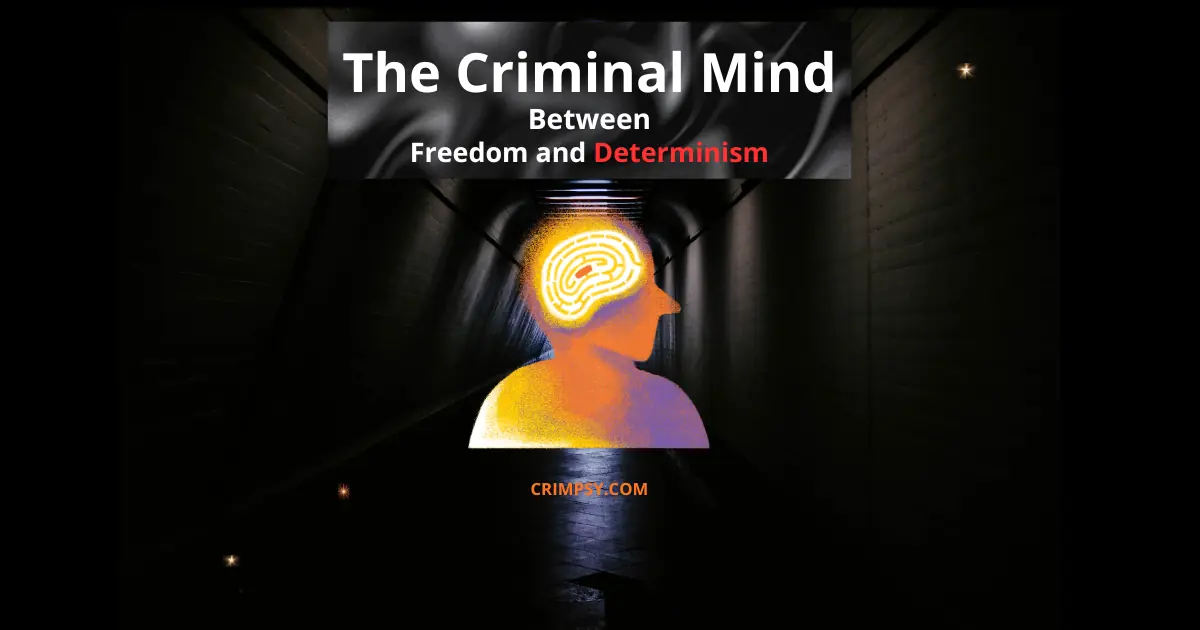
Conceptual illustration of the criminal mind showing the tension between freedom and determinism, with a glowing brain inside a human silhouette in a dark tunnel

Few questions in the history of human thought have proven as enduring — or as consequential — as the question of why people commit crimes. Is the criminal a free moral agent who deliberately chooses to transgress the law, fully aware of the harm their actions cause? Or are they, to a significant degree, a … Read more

Albert K. Cohen, Karl Marx, and Robert K. Merton: Causes of crime

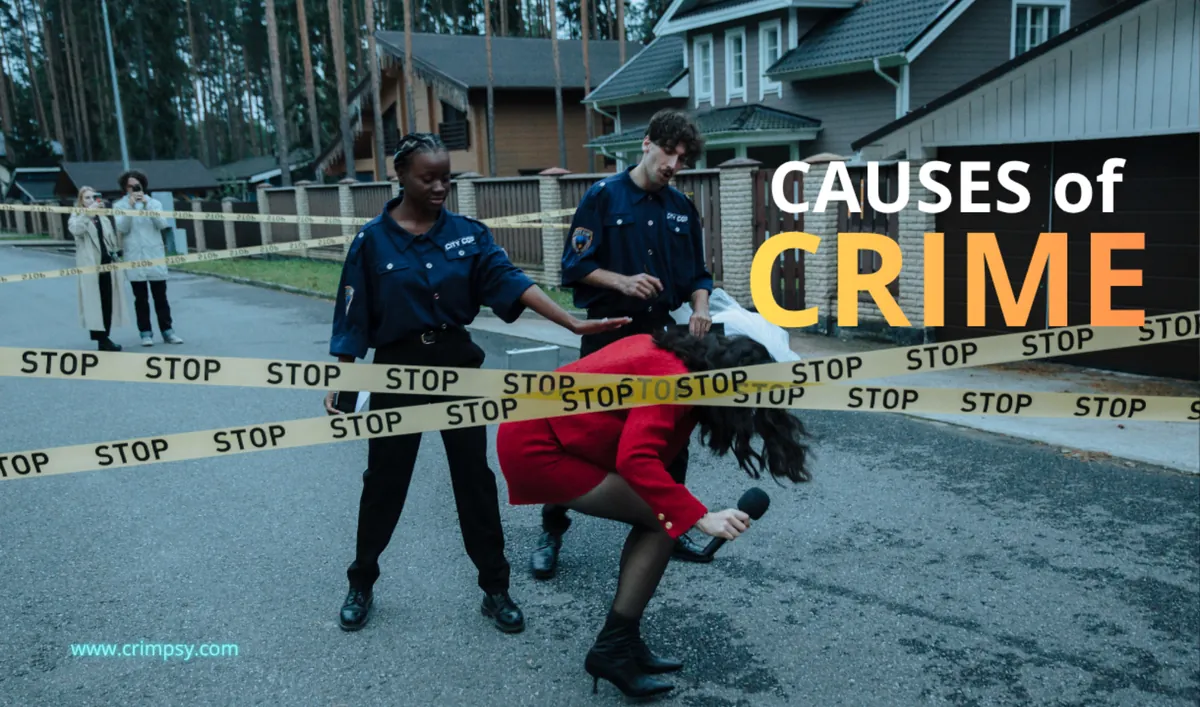
police officers and forensic team at crime scene causes of crime criminology theory

Introduction: criminology theories Criminology has never been a discipline built upon a single explanatory key. It is, rather, a field of tension, dialogue, and contestation, where each major theory illuminates one dimension of the criminal phenomenon while leaving others in partial shadow. Crime is at once a legal violation, a social act, a moral rupture, … Read more

Criminal Psychology: How Criminal Minds Think

Conceptual image representing criminal psychology and how criminal minds think with dark tones and human brain illustration

Introduction: Criminal Mind Crime cannot be understood as merely an unlawful act; rather, it is a complex human phenomenon that emerges from the depths of the human psyche, where desires, conflicts, social pressures, and biological structures intertwine. Criminal psychology does not only ask “what happened?” but goes beyond it to a deeper question: “why did … Read more

Branches of Criminology

Diagram illustrating the main branches of criminology including criminal sociology, criminal psychology, and criminal biology

Criminology is one of the most complex and important human and social sciences in the modern era. It strives to answer a fundamental question: Why do individuals commit crimes? The study of criminology is not limited to merely describing criminal acts; it extends to analyzing the criminal phenomenon from multiple angles, aiming to understand the … Read more

The Psychology of Organized Crime in the Digital Age | Criminology

A hooded figure representing a digital cybercriminal sits surrounded by computer screens, glowing code, and a global network map, illustrating the psychology of organized crime in the digital age.

Introduction: Why Has the Psychology of Organized Crime in the Digital Age Become a Central Topic in Criminology? Organized crime in the twenty-first century is no longer confined to traditional gangs that rely on territorial control and direct violence. We have entered a new historical phase in which cyberspace has transformed into a parallel criminal … Read more

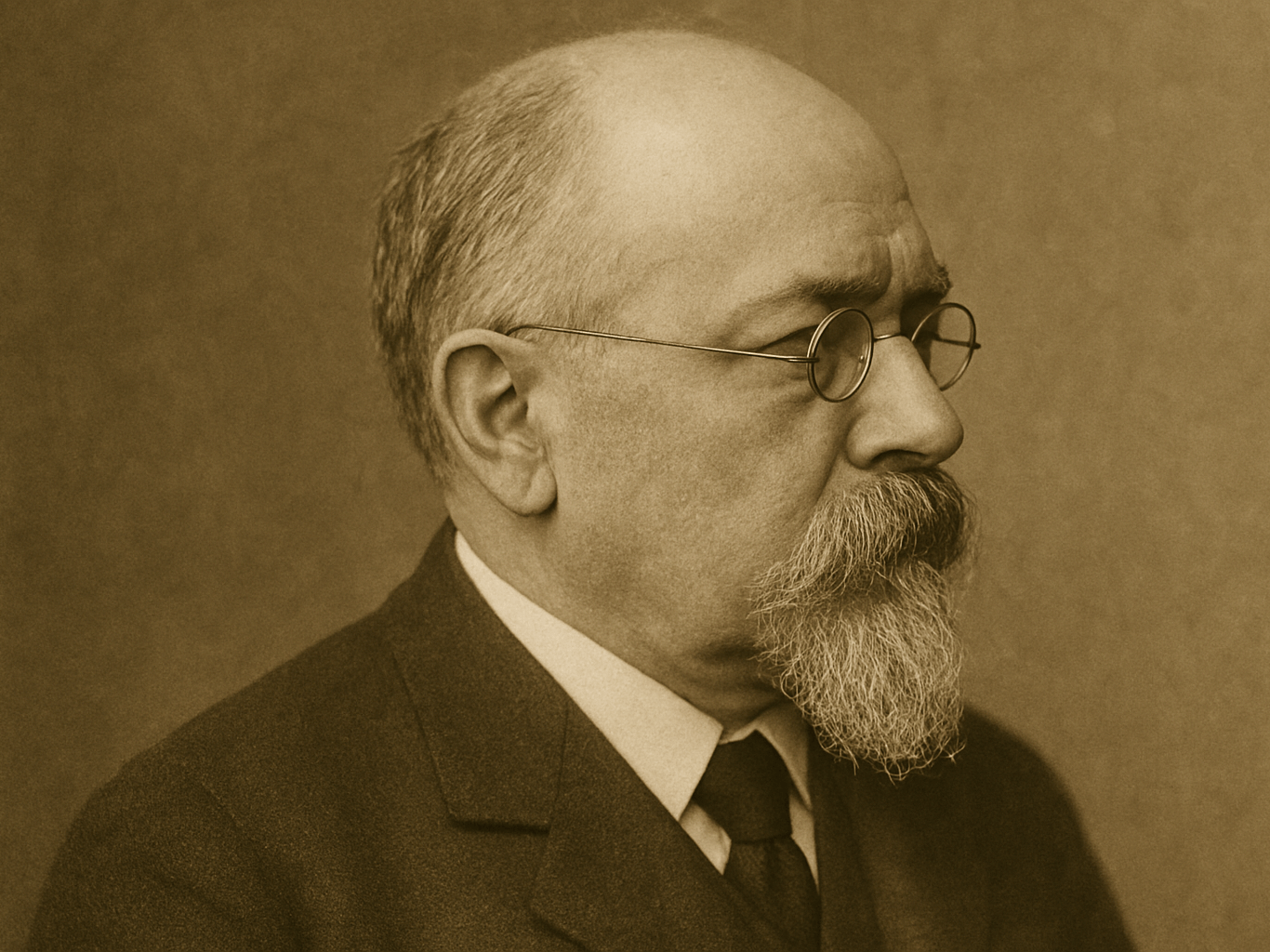
Jeffrey Epstein and Criminology: Applying Lombroso, Sutherland, and Marx’s Theories

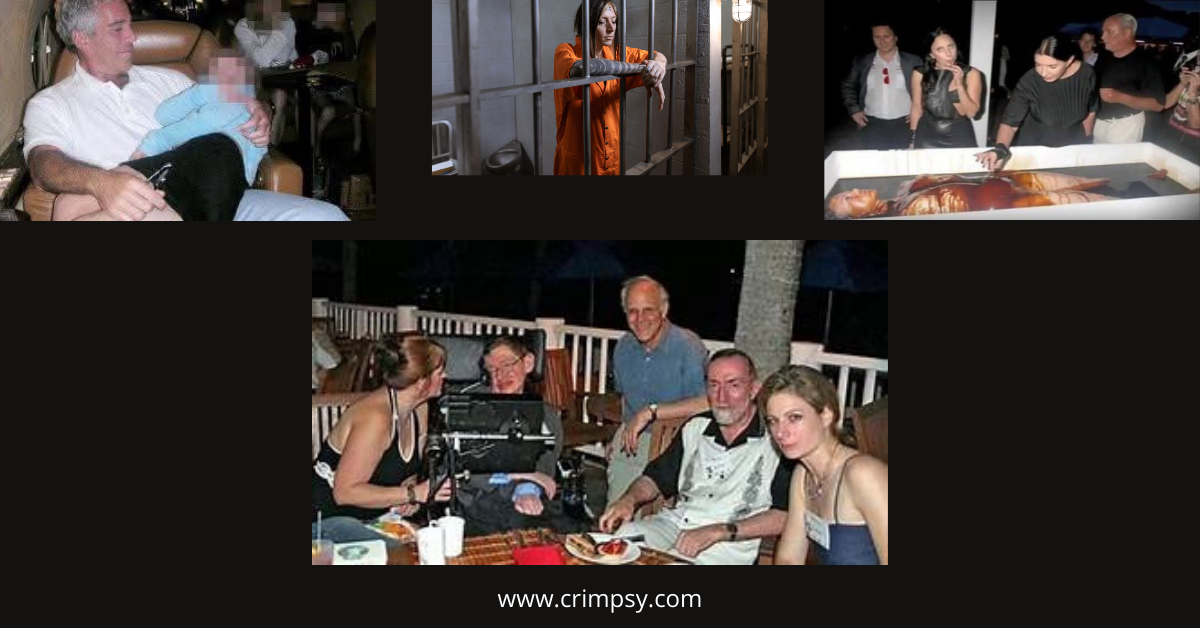
A collection of photos showing Jeffrey Epstein and a number of other prominent figures, released by the U.S. Department of Justice.

Jeffrey Epstein (1953–2019) was an American businessman who gained international notoriety due to his involvement in a large-scale sexual exploitation case targeting children and underage girls, as well as his connections to prominent political, economic, and academic figures. These associations placed him at the center of one of the most controversial criminal scandals of the … Read more

The Scientific Nature of Criminology: The Opposing Trend and Its Main Criticisms

A dark and mysterious forensic setting featuring the phrase 'Criminology is not a science !' in glowing orange text at the center. The scene includes an open book with a magnifying glass, fingerprints, laboratory glassware, a microscope, a glowing DNA strand, and scattered investigative tools, creating a scholarly and dramatic atmosphere.

Is Criminology a Science The question of whether criminology can be regarded as a true science has long occupied a central place in criminological and philosophical debates. Since its emergence as an independent field of study, criminology has sought to explain criminal behavior through systematic observation, empirical research, and theoretical frameworks inspired by the natural … Read more

Expanded Concepts of Criminology: Ferri, the Austrian School, and Sutherland

A horizontal, enigmatic artwork symbolizing the Austrian School of Criminology, with an abstract, moody background, emphasizing forensic science, investigation, and criminal behavior, without any prominent human figures.

Criminology is one of the human sciences whose intellectual roots can be traced back to early philosophical reflections on crime, morality, and social order. Ancient Greek philosophers, particularly Plato and Aristotle, sought to understand criminal behavior through ethical reasoning and the pursuit of justice, viewing crime as a moral deviation that threatened the harmony of … Read more

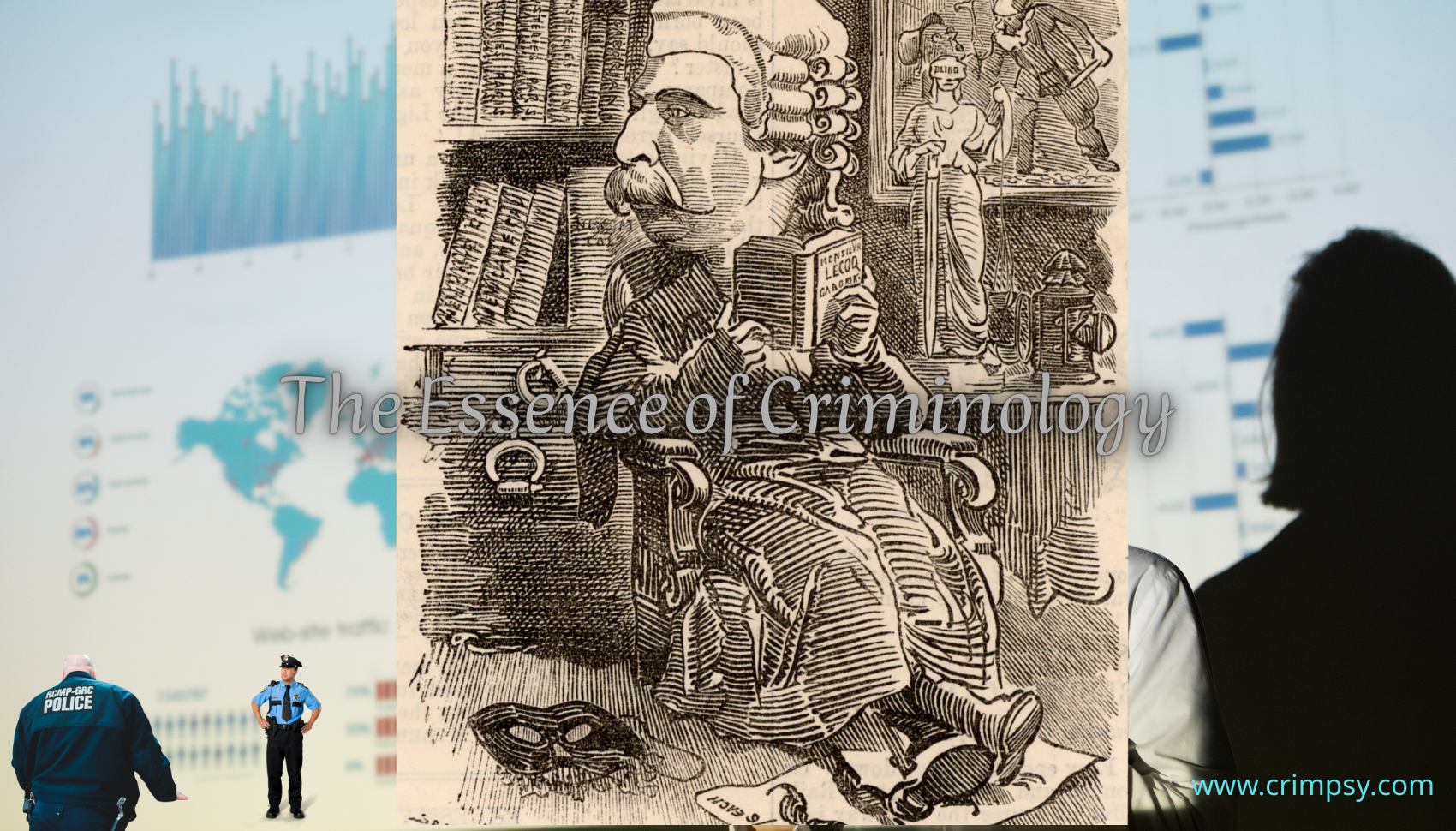
The Essence of Criminology: Definitions, Scientific Foundations, and Key Objectives

A conceptual illustration representing the essence of criminology, showing symbolic elements related to crime, justice, and social analysis.

Crime has always represented one of the most complex and troubling phenomena facing human societies. From ancient civilizations to modern nation-states, communities have continuously sought to understand why individuals engage in behavior that violates social norms, disrupts public order, and threatens collective security. As societies evolved and crime took on increasingly diverse forms—ranging from traditional … Read more

Penology: Definition, Theories, and Modern Applications in Criminal Justice

The image prominently and beautifully features the phrase "PENOLOGY" with calm and wonderful colors.

Introduction Penology is a specialized branch of criminology and criminal justice that examines the philosophy, methods, and effectiveness of punishment. It focuses on how societies penalize offenders and how they can be corrected, reformed, and reintegrated into society. The concept of penology bridges law and social science, highlighting the deep relationship between crime, justice, and … Read more

Born Criminal Theory by Cesare Lombroso: Definition, Impact, and Criticism

Antique book titled "The Born Criminal" by Cesare Lombroso resting on a wooden surface

the born criminal The history of criminology is filled with debates over whether crime is a product of nature, nurture, or a combination of both. In the late 19th century, one of the most influential and controversial figures in criminology, Cesare Lombroso, introduced the concept of the “Born Criminal.” His theory suggested that some individuals … Read more

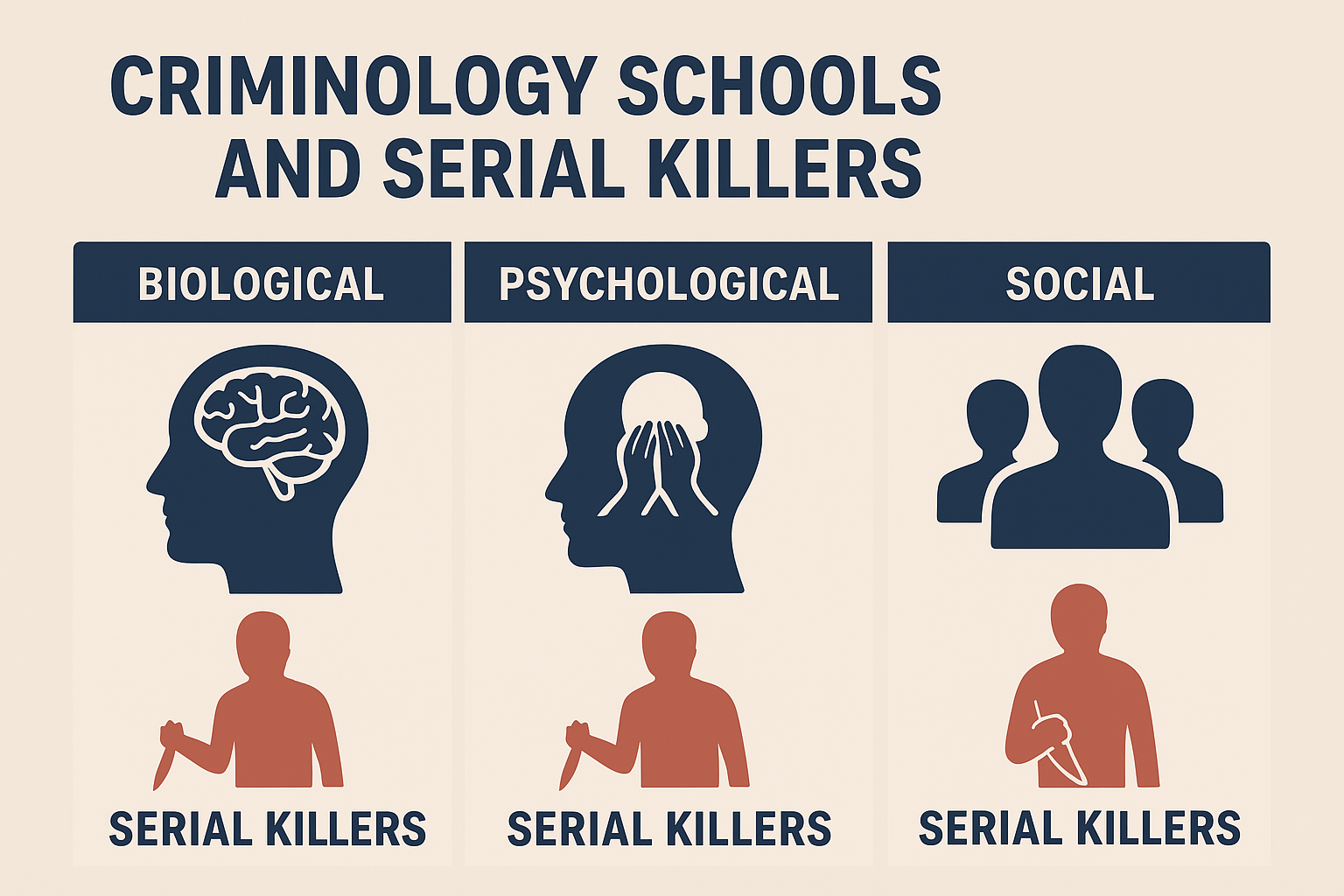
Serial Killer in Criminology: Theories, Schools, and Thinkers

An infographic illustrating different schools of criminology, including classical, biological, psychological, and social theories, with focus on serial killer analysis.

Introduction The phenomenon of the serial killer has always captured the attention of criminologists, psychologists, and the general public alike. In criminology, serial killers represent one of the most extreme and disturbing examples of criminal behavior, where individuals repeatedly commit murder over an extended period, usually driven by psychological, social, or biological motives. Unlike ordinary … Read more