
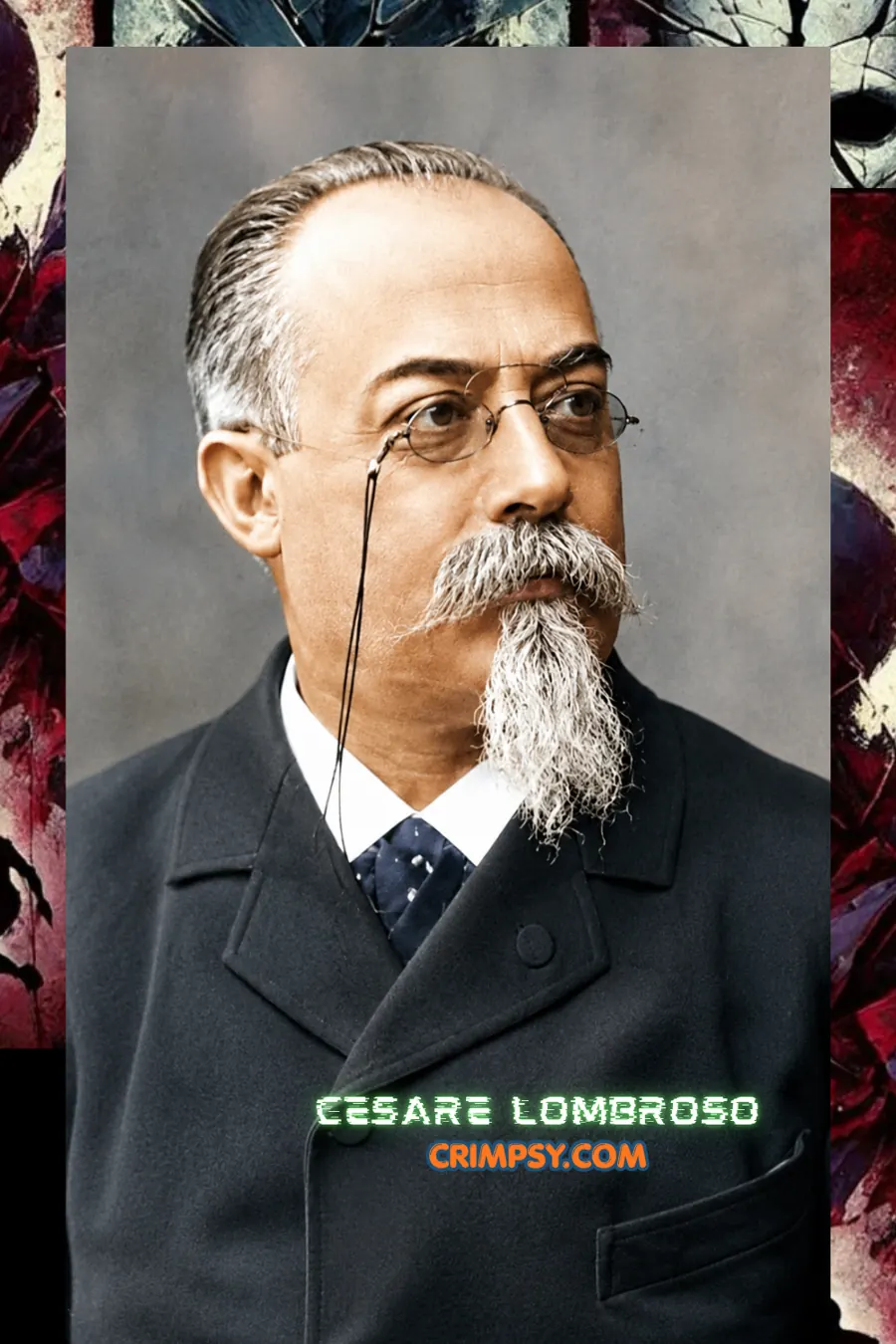
The study of criminal behavior has Criminology, evolving from philosophical interpretations of crime to scientific attempts to understand the causes of deviant behavior. Among the most iCesare Lombroso and his fol
The Positivist School of Criminology represents one of the most influential stages in the evolution of modern criminological thought. It focuses on understanding the causes of crime based on the biological, psychological, and social constitution of the individual. This school studies crime as a phenomenon that can be analyzed through interconnected factors, offering a more comprehensive perspective on criminal behavior. The Formation School emerged in two main phases: the Classical Formation School and the Modern Formation School, each contributing significant scientific and theoretical advancements to our understanding of crime.
The Formation School (the Italian Positivist School) marked a turning point in criminology by shifting the focus from moral choice to scientific inquiry. Positivist theorists argued that crime is shaped by factors beyond an individual’s full control – biological traits, psychological tendencies, and social environment – rather than just by free will. This multidisciplinary outlook treated the offender (not just the offense) as the subject of study. Its core tenets include determinism (behavior is influenced by outside forces) and empiricism (applying observation and data to understand crime). By integrating medicine, psychology, and sociology, the Formation School sought to explain criminal behavior through connected factors rather than abstract philosophy.
First Section: The Classical Formation School
Subsection 1: LOMBROSO ’s Theory
CESARE LOMBROSO (1835–1909) is regarded as one of the most influential figures in establishing the Classical Formation School. Born in Italy, LOMBROSO studied medicine and anatomy, which enabled him to apply scientific approaches to the study of crime. During his work as a prison doctor in Italy, he observed common physical traits among prisoners, such as asymmetrical skulls, large ears, and prominent jaws. Based on these observations, he concluded that these traits reflect a hereditary inclination toward crime.
LOMBROSO ‘s theory emphasized the concept of the “born criminal,” suggesting that some individuals exhibit criminal tendencies regardless of environmental or upbringing factors. He categorized criminals into groups based on their motives and physical traits, proposing that these traits resulted from “evolutionary atavism.” He believed criminals were “biological throwbacks” to earlier stages of human evolution.
While his contributions primarily focused on physical analysis, LOMBROSO also attempted to incorporate psychological elements such as impulsivity and lack of self-control. Despite the radical nature of his theory, it laid the foundation for methodically analyzing criminal behavior beyond purely moral or legal perspectives.
Subsection 2: Evaluation of LOMBROSO ’s Theory
Although LOMBROSO ‘s theory significantly influenced criminology, it faced substantial criticism for its overemphasis on biological factors while neglecting social and psychological dimensions. One of the most significant critiques was the lack of scientific rigor in his studies, as they were based on limited samples of prisoners, leading to unwarranted generalizations.
Moreover, modern research has shown that the physical traits LOMBROSO highlighted are not exclusive to criminals and can also be found in non-criminal individuals. Additionally, his linkage of crime to heredity sparked ethical debates, as the theory was seen as a justification for social and racial discrimination. Nonetheless, LOMBROSO ‘s primary contribution lies in transitioning the study of crime from a philosophical and moral domain to a scientific field grounded in observation and analysis.
Nevertheless, Lombroso’s work wasn’t worthless. By insisting on empirical investigation—measuring skulls, counting criminals, comparing data—he moved criminology toward modern science. His emphasis on looking for causes of crime (albeit the wrong ones) laid a foundation for later theorists. In that sense, Lombroso’s legacy survives in the very approach of seeking underlying factors – biological or otherwise – to explain offending.
Second Section: The Modern Formation School
Subsection 1: The Theory of Criminal Formation by Di TULLIO
Decades after LOMBROSO ‘s ideas, Raphael DI TULLIO advanced the Formation School through the concept of “criminal formation.” Born in Italy, Di TULLIO studied psychology and sociology, enabling him to offer a more integrated perspective on the causes of crime. His theory emphasized the interaction between heredity and environment, arguing that crime results from a complex interplay of biological, psychological, and social factors.
DI TULLIO ’s theory posited that criminal behavior arises not from a single cause but from the dynamic interaction of various factors. He highlighted the role of psychological disturbances, such as repression or emotional trauma, and social conditions, such as poverty and marginalization, in shaping criminal tendencies. This approach added a new dimension to the Formation School by recognizing the importance of the social and psychological context in explaining criminal behavior.
By the late 19th and early 20th centuries, Italian criminology had broadened Lombroso’s basic approach. The hypothetical figure Di Tullio (though obscure in mainstream literature) is said to represent thinkers who treated criminality as a formation process involving multiple elements. Like other modern positivists, Di Tullio would have seen crime as the outcome of an interaction between inherited traits and life experiences. In this view, heredity and environment work together: a person may have biological or psychological vulnerabilities (e.g. impulsivity, cognitive deficits), but whether these lead to crime depends on social conditions and individual history. This blended perspective resembles what later criminologists call the biopsychosocial model. For example, Lombroso’s own student Enrico Ferri later argued that “poverty, lack of education, and poor living conditions” combine with any innate tendencies to push people toward crime. Ferri (and by extension Di Tullio’s theory of criminal formation) emphasized that one must consider economic, social, psychological, and biological factors together. In practice, this meant studying offenders’ life histories: trauma or social marginalization could aggravate primitive impulses, while strong family or education might suppress them. Thus, the “criminal formation” thesis stresses that no single cause is sufficient; the crucible of crime is the whole personal and social environment acting on predispositions.
(Note: Direct citations for Di Tullio’s work are scarce, but his described ideas align closely with Ferri’s multi-causal model. Contemporary research in biosocial criminology similarly confirms that genetic dispositions only produce crime under adverse conditions.)
Subsection 2: The Theory of Multiple Causes by Enrico FERRI
Enrico FERRI , one of LOMBROSO ‘s most prominent students, expanded the scope of the Formation School through his theory of multiple causes. FERRI argued that crime is a multifaceted phenomenon influenced by biological factors (e.g., heredity and physical disorders), psychological factors (e.g., emotions and motivations), and social factors (e.g., poverty and education).
FERRI introduced the concept of “causal equilibrium,” suggesting that each criminal case results from a unique interaction of various factors. He emphasized the need for a comprehensive approach to analyzing criminal behavior, considering the interplay of these elements. FERRI also contributed practical insights by proposing social reforms to reduce crime, such as improving education and creating job opportunities, making his theory more actionable than LOMBROSO ‘s.
Enrico Ferri , explicitly formulated the multiple-causation theory. Ferri insisted that crime is “the result of biological, psychological, and social forces,” not the product of any single factor. He introduced the concept of a “law of criminal saturation,” observing that each society tends to generate a fairly stable level of crime based on its own conditions. In Ferri’s view, harsher punishment alone cannot eliminate crime; instead, social reforms (improved education, employment opportunities, housing, and public health) were the most effective preventive measures. For example, he argued that growing up in extreme poverty or trauma could activate any criminal predispositions, while better schooling and jobs could counterbalance them.
Ferri also devised detailed typologies of offenders (e.g. born criminals, insane criminals, habitual criminals, criminals of passion, etc.) to underscore that offenders are not homogeneous. This classification implied that penal responses should be tailored to the type: a minor offender shaped by environment might need rehabilitation, whereas a psychopathic offender might require stricter containment. Importantly, Ferri advanced the idea of “social defense” as a guiding principle of punishment. Rejecting the idea of retribution for its own sake, he proposed replacing rigid sentences with flexible measures aimed at protecting society (e.g. indeterminate confinement, probation, or therapeutic institutions) depending on the offender’s danger and potential for reform. In summary, Ferri’s theory of multiple causes synthesized biology, psychology, and sociology into one framework, and recommended preventive social policies as well as individualized criminal justice interventions.
Subsection 3: Evaluation of Modern Formation School Ideas
The Modern Formation School made significant progress in criminology by integrating multiple factors to understand criminal behavior. However, some criticisms have been raised, particularly regarding the difficulty of measuring the interaction between diverse factors. Additionally, an overemphasis on environmental factors may downplay the role of individual characteristics, potentially reducing the precision of these theories in certain cases.
Despite these criticisms, the Modern School provided a robust scientific foundation for criminal studies and contributed to developing reformative policies aimed at addressing the root causes of crime.
The Modern Formation School advanced criminology significantly, but not without challenges. Its strength is in acknowledging complexity: criminal behavior is rarely due to a single cause. By integrating diverse factors, it laid groundwork for research in criminal psychology, biosocial criminology, and policy reforms. However, critics note that such broad theories can be hard to test or apply precisely. When virtually everything is considered a potential cause, isolating the contribution of any one factor becomes difficult. Scholars caution against simplistic determinism: biological predispositions or environmental risks should not be viewed as destiny. In practice, measuring gene–environment interactions or psychological influences demands sophisticated longitudinal studies and remains an ongoing challenge.
On the other hand, the Modern School’s multi-causal perspective has had concrete benefits. By seeing poverty, education, and family life as causes of crime, it legitimized many social interventions. Ferri’s call for preventing crime through social reform foreshadowed community programs, rehabilitative services, and early-intervention initiatives. In essence, while it may blur sharp predictions, this approach encourages treating underlying causes rather than only punishing symptoms. For example, modern developmental theories (like Terrie Moffitt’s two-pathway model) illustrate how early neuropsychological deficits interact with childhood adversity to predict chronic offending. Such interactionist models extend the Formation School’s legacy: they analyze offenders holistically, acknowledging both risk factors and life contexts. Thus, although critics of the Modern School point out its complexity, most criminologists now embrace a biopsychosocial viewpoint that Lombroso and Ferri helped pioneer.

Conclusion
In conclusion, the evolution of the Formation School, beginning with Cesare Lombroso’s ideas and culminating in the contributions of Raphael Di Tullio and Enrico Ferri, marks a pivotal shift in the study of crime and criminology. This school successfully introduced scientific approaches to analyzing criminal behavior, transforming criminology from a field centered on morality and deterrence into one rooted in science and multi-faceted analysis.
CESARE LOMBROSA, with his groundbreaking concept of the “born criminal,” sparked considerable debate but established a new scientific movement that emphasized research and observation. In contrast, Raphael DI TULLIO and Enrico FERRI expanded the scope of the Formation School by integrating social and psychological factors, highlighting the broader contexts influencing criminal behavior.
The contributions of these thinkers go beyond theoretical frameworks. They laid the groundwork for modern criminology by inspiring researchers to develop more comprehensive approaches, such as criminal psychology and contemporary criminal policies, which aim to address the causes of crime rather than merely punishing it.
The enduring impact of the Formation School is evident in today’s criminological research, where biological, psychological, and social factors are analyzed to understand criminal behavior. This progress underscores the importance of combining science and society to comprehend complex phenomena like crime, making the efforts of these thinkers an indispensable part of the history and future of criminology.
On the other hand, the Modern School’s multi-causal perspective has had concrete benefits. By seeing poverty, education, and family life as causes of crime, it legitimized many social interventions. Ferri’s call for preventing crime through social reform foreshadowed community programs, rehabilitative services, and early-intervention initiatives. In essence, while it may blur sharp predictions, this approach encourages treating underlying causes rather than only punishing symptoms. For example, modern developmental theories (like Terrie Moffitt’s two-pathway model) illustrate how early neuropsychological deficits interact with childhood adversity to predict chronic offending. Such interactionist models extend the Formation School’s legacy: they analyze offenders holistically, acknowledging both risk factors and life contexts. Thus, although critics of the Modern School point out its complexity, most criminologists now embrace a biopsychosocial viewpoint that Lombroso and Ferri helped pioneer.
Frequently Asked Questions
What is the Constitutional School in criminology?
The Constitutional School in Criminology is a criminological approach that explains criminal behavior through the biological, psychological, and natural constitution of the individual. It emphasizes that crime may result from inherited traits, mental conditions, or physiological characteristics.
Who was Cesare Lombroso?
Cesare Lombroso was an Italian physician and criminologist considered one of the founders of positivist criminology. He is best known for his theory of the “born criminal,” which argued that some individuals possess innate biological tendencies toward crime.
What is the theory of the “born criminal”?
The theory of the “born criminal” suggests that certain individuals are biologically predisposed to criminal behavior due to inherited physical and psychological characteristics. Lombroso believed these traits represented evolutionary atavism.
Why was Lombroso’s theory criticized?
Lombroso’s theory faced criticism because it relied heavily on biological explanations while neglecting social and environmental factors. Modern scientific studies also demonstrated that the physical traits he identified are not exclusive to criminals.
References
- Criminal Man — Cesare Lombroso.
- Criminal Man. Durham: Duke University Press, 2006.
- (Originally published in Italian in 1876). The Female Offender — Cesare Lombroso & Guglielmo Ferrero.
- The Female Offender. New York: D. Appleton and Company, 1895. Criminal Sociology — Enrico Ferri.
- Criminal Sociology. New York: D. Appleton and Company, 1917. Criminologia — Raffaele Garofalo.
- Criminologia: Studio sul Delitto, sulle sue Cause e sui Mezzi di Repressione. Torino: Fratelli Bocca, 1885.
- The Criminal Man: A Revolutionary Study in Criminology (Cesare Lombroso)
- The Historical Journey of Criminology
- The Formative School: The Classical Formative School and the Modern Formative School